Glucose
- Chinese
- 葡萄糖
- Pinyin
- Pu Tao Tang
- Latin
- Glucosum
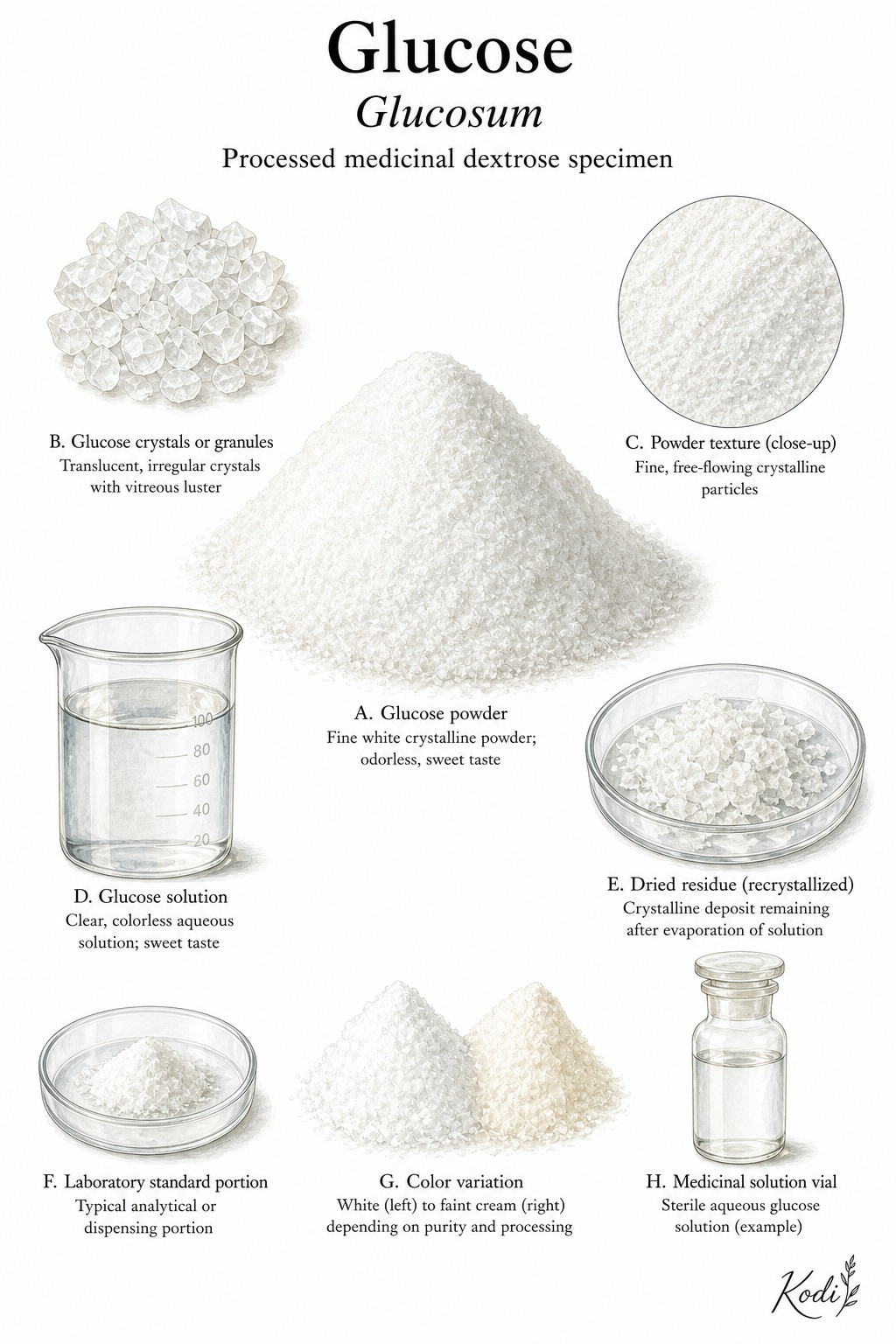
Known in TCM as Pu Tao Tang (葡萄糖), this sweet, neutral herb enters the Spleen and Stomach. Traditionally, it rapidly supplements energy and body fluids - in modern Chinese medical usage glucose is employed when acute weakness, inadequate intake, dehydration, or hypoglycemia call for a direct nutritive substrate rather than a botanical extract. Modern research has identified D-glucose among its active constituents.
Part used: Glucose
TCM Properties
- Taste
- sweet
- Temperature
- neutral
- Channels
- Spleen, Stomach
Traditional Use
Primary Actions
- Rapidly supplements energy and body fluids - in modern Chinese medical usage glucose is employed when acute weakness, inadequate intake, dehydration, or hypoglycemia call for a direct nutritive substrate rather than a botanical extract.
- Generates fluids and relieves thirst in recovery settings - oral glucose preparations are used to replenish fluid and caloric loss after sweating, diarrhea, fever, or poor intake.
- Acts as a supportive medicinal carrier - Chinese pharmacy and hospital practice also uses glucose as a solvent, infusion component, and nutritive adjunct rather than as a classical decoction herb.
Secondary Actions
- This record is intentionally written as a processed medicinal nutrient rather than a traditional crude herb monograph, because pure glucose entered Chinese practice largely through pharmacy and hospital medicine.
- Its sweet, neutral Spleen-Stomach profile is an inference from function rather than a well-developed classical channel tradition, so this entry should be read more conservatively than standard materia medica records.
Classical References
- Modern Chinese drug references describe glucose as a direct energy and fluid replenisher used for hypoglycemia, supportive nutrition, dehydration, and as a drug diluent.
- Unlike Bing Tang or other food-medicine sugars, pure glucose does not carry a rich classical formula tradition in the materia medica and is better understood as a pharmaceutical support substance.
- INFERENCE NOTE: the Spleen-Stomach channel attribution in this entry reflects its sweet, nutritive, fluid-replenishing role rather than a strong classical consensus.
Modern Research
Active Compounds
- D-glucose - the core physiologic monosaccharide and primary active substance
- Oral dextrose preparations - rapidly absorbed formulations used for energy and fluid replacement
- Intravenous glucose solutions - hospital formulations whose effects depend strongly on route, concentration, and clinical context
Studied Effects
- Modern literature treats glucose as an essential metabolic substrate and clinical support agent rather than as an herb with a limited phytochemical fingerprint.
- Its present-day medical value lies in correcting hypoglycemia, supporting caloric and fluid replacement, and serving as a pharmaceutical vehicle, not in broad stand-alone herbal claims.
- Safety concerns are dominated by glycemic control, osmotic load, and route-specific complications rather than by hidden herb-drug interactions.
Safety & Interactions
Contraindications
- Uncontrolled hyperglycemia or diabetic ketoacidosis unless specifically medically directed
- Use as a substitute for proper emergency or inpatient care in severe illness, collapse, or electrolyte disturbance
Cautions
- Because glucose is pharmacologically active as a nutrient, route and dose matter; concentrated oral or intravenous products can rapidly worsen hyperglycemia.
- Patients using insulin or glucose-lowering medicines may need monitoring or dose adjustment when therapeutic glucose products are given.
- This record should be read as modern supportive medicine rather than as evidence for a broad classical herb indication set.
Drug Interactions
- Insulin and glucose-lowering medicines may require adjustment when therapeutic glucose products are used
Frequently Asked Questions
What is Glucose used for?
Glucose is traditionally used to Rapidly supplements energy and body fluids - in modern Chinese medical usage glucose is employed when acute weakness, inadequate intake, dehydration, or hypoglycemia call for a direct nutritive substrate rather than a botanical extract., Generates fluids and relieves thirst in recovery settings - oral glucose preparations are used to replenish fluid and caloric loss after sweating, diarrhea, fever, or poor intake., Acts as a supportive medicinal carrier - Chinese pharmacy and hospital practice also uses glucose as a solvent, infusion component, and nutritive adjunct rather than as a classical decoction herb.. Research has investigated its effects on: Modern literature treats glucose as an essential metabolic substrate and clinical support agent rather than as an herb with a limited phytochemical fingerprint.; Its present-day medical value lies in correcting hypoglycemia, supporting caloric and fluid replacement, and serving as a pharmaceutical vehicle, not in broad stand-alone herbal claims..
Is Glucose safe during pregnancy?
The safety of Glucose during pregnancy has not been established. Consult a qualified healthcare provider before use.
What are the contraindications for Glucose?
Glucose should not be used in: Uncontrolled hyperglycemia or diabetic ketoacidosis unless specifically medically directed; Use as a substitute for proper emergency or inpatient care in severe illness, collapse, or electrolyte disturbance. Consult a qualified practitioner before use.
Does Glucose interact with any medications?
Glucose may interact with: Insulin and glucose-lowering medicines may require adjustment when therapeutic glucose products are used. Always inform your healthcare provider of any herbal supplements you are taking.