Glutinous Rice Root
- Chinese
- 糯稻根
- Pinyin
- Nuo Dao Gen
- Latin
- Radix Oryzae Glutinosae
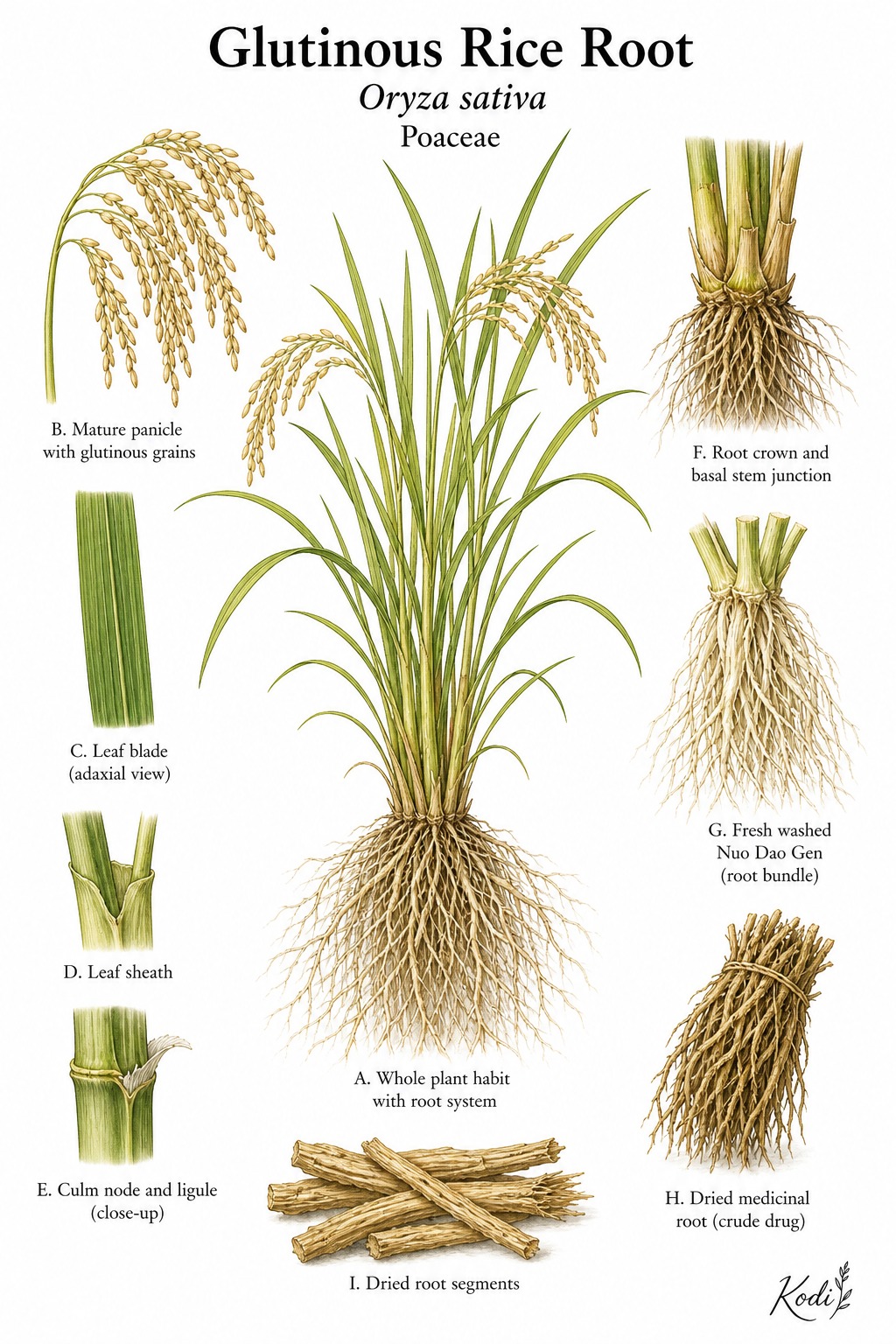
Known in TCM as Nuo Dao Gen (糯稻根), this sweet, neutral herb enters the Liver, Lung, and Kidney. Traditionally, it stabilizes the exterior and stops spontaneous sweating - Ru Dao Gen is a classic convalescent herb for weak surface Qi with daytime sweating, post-illness fatigue, and easy fluid loss, most often applied for night sweats, spontaneous sweating, and yin deficiency. Modern research has identified Rice-root among its active constituents.
Part used: Root
Also Known As
Latin: Radix Oryzae Glutinosae | Pinyin: Nuo Dao Gen | Chinese: 糯稻根
TCM Properties
- Taste
- sweet
- Temperature
- neutral
- Channels
- Liver, Lung, Kidney
Traditional Use
Primary Actions
- Stabilizes the exterior and stops spontaneous sweating - Ru Dao Gen is a classic convalescent herb for weak surface Qi with daytime sweating, post-illness fatigue, and easy fluid loss.
- Checks night sweating and clears deficiency heat - it is used when Yin deficiency or prolonged illness causes evening heat, steaming bones sensation, or sleep-related sweating.
- Benefits the Stomach and generates fluids - traditional use extends to dry mouth, irritability after fever, and poor recovery when fluids are depleted but stronger tonics would be too cloying.
Secondary Actions
- Ru Dao Gen is unusually gentle and is often chosen for children, the elderly, or post-febrile patients who need slow restoration rather than forceful astringing.
- It is frequently paired with Fu Xiao Mai, Mu Li, Di Gu Pi, or Bie Jia when sweating and low-grade fever coexist.
Classic Formulas
- Ru Dao Gen with Fu Xiao Mai and Mu Li - a classic pairing style for spontaneous sweating and night sweats from deficiency.
- Ru Dao Gen with Di Gu Pi and Bie Jia - used when deficiency heat and low-grade fever accompany chronic sweating.
- Ru Dao Gen in convalescent sweet decoctions - a mild restorative approach when post-illness thirst, poor recovery, and depleted fluids are more prominent than full excess heat.
Classical References
- Me & Qi describes Nuo Dao Gen as sweet and neutral, entering the Liver, Lung, and Kidney to stop spontaneous and night sweating while tonifying the Stomach and generating body fluids.
- Traditional use is strongest in deficiency sweating and recovery states, not in exuberant excess heat or damp obstruction.
- SOURCE NOTE: the original import carried the nonstandard pinyin Ru Dao Gen, but the Chinese name 糯稻根 and current references support Nuo Dao Gen or Nuo Dao Gen Xu.
Modern Research
Active Compounds
- Rice-root diterpenes such as momilactone-related compounds - specialized metabolites identified from Oryza roots
- Water-soluble nutritional fractions - broad saccharide and amino-acid components consistent with the herb's restorative, food-adjacent character
- Minor phenolic and antioxidant constituents - supportive compounds reported from broader rice-root investigations
Studied Effects
- Direct indexed research on Ru Dao Gen as a TCM crude drug remains sparse, so modern evidence should be read very cautiously.
- A 2015 phytochemical study isolated diterpenes from Oryza sativa roots that inhibited nitric oxide production in activated macrophages, offering a limited mechanistic correlate for anti-inflammatory use but not direct clinical validation of the traditional monograph (PMID 26363880).
- Most broader rice research concerns grain, bran, or agricultural by-products rather than the medicinal root, so those findings should not be casually generalized to Ru Dao Gen.
PubMed References
Safety & Interactions
Contraindications
- Excess heat or damp obstruction without deficiency sweating or fluid depletion
Cautions
- Ru Dao Gen is mild and generally food-like, but persistent night sweats, fever, or wasting symptoms still warrant medical evaluation rather than indefinite self-treatment.
- Most modern evidence is indirect and not specific to the traditional glutinous-rice-root crude drug.
- MSK page not found - drug interaction data not available from Memorial Sloan Kettering integrative medicine database
Conditions
- Night Sweats Traditional ★★★★☆ JSON
- Spontaneous Sweating Traditional ★★★★☆ JSON
- Yin Deficiency Traditional ★★★☆☆ JSON
- Fever Traditional ★★☆☆☆ JSON
Frequently Asked Questions
What is Glutinous Rice Root used for?
Glutinous Rice Root is traditionally used to Stabilizes the exterior and stops spontaneous sweating - Ru Dao Gen is a classic convalescent herb for weak surface Qi with daytime sweating, post-illness fatigue, and easy fluid loss., Checks night sweating and clears deficiency heat - it is used when Yin deficiency or prolonged illness causes evening heat, steaming bones sensation, or sleep-related sweating., Benefits the Stomach and generates fluids - traditional use extends to dry mouth, irritability after fever, and poor recovery when fluids are depleted but stronger tonics would be too cloying.. Research has investigated its effects on: Direct indexed research on Ru Dao Gen as a TCM crude drug remains sparse, so modern evidence should be read very cautiously.; A 2015 phytochemical study isolated diterpenes from Oryza sativa roots that inhibited nitric oxide production in activated macrophages, offering a limited mechanistic correlate for anti-inflammatory use but not direct clinical validation of the traditional monograph (PMID 26363880)..
What are other names for Glutinous Rice Root?
Glutinous Rice Root is also known as Oryza, Nuo Dao Gen Xu, Ru Dao Gen. In TCM: 糯稻根 (Nuo Dao Gen); Radix Oryzae Glutinosae.
Is Glutinous Rice Root safe during pregnancy?
The safety of Glutinous Rice Root during pregnancy has not been established. Consult a qualified healthcare provider before use.
What are the contraindications for Glutinous Rice Root?
Glutinous Rice Root should not be used in: Excess heat or damp obstruction without deficiency sweating or fluid depletion. Consult a qualified practitioner before use.