Gynura
- Chinese
- 紫背天葵
- Pinyin
- Zi Bei Tian Kui
- Latin
- Herba Gynurae Bicoloris
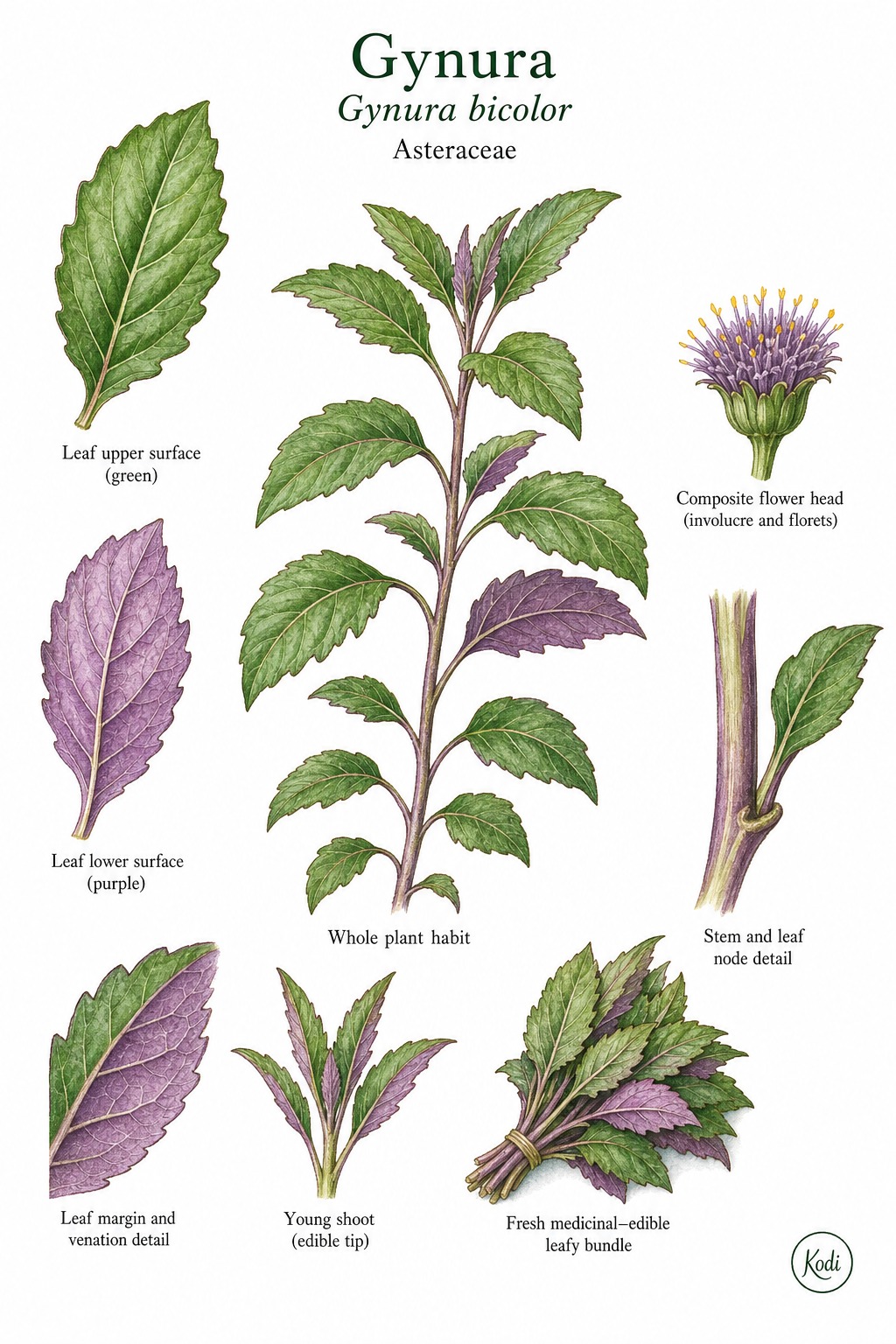
Known in TCM as Zi Bei Tian Kui (紫背天葵), this sweet, cool herb enters the Liver and Lung. Traditionally, it clears heat and resolves toxicity - Zi Bei Tian Kui is used in regional food-medicine and folk practice for sore throat, inflamed lesions, hot swelling, and minor toxic-heat complaints, most often applied for pharyngitis, furunculosis, and diabetes. Modern research has identified Phenolic among its active constituents.
Part used: Whole herb
TCM Properties
- Taste
- sweet
- Temperature
- cool
- Channels
- Liver, Lung
Traditional Use
Primary Actions
- Clears heat and resolves toxicity - Zi Bei Tian Kui is used in regional food-medicine and folk practice for sore throat, inflamed lesions, hot swelling, and minor toxic-heat complaints.
- Cools blood and reduces swelling - traditional use extends to bruised or inflamed tissue, minor bleeding tendencies, and swollen painful lesions where cooling fresh herbs are preferred.
- Functions as a medicinal vegetable during recovery - because it is commonly eaten as well as medicated, it is often used more gently than a strongly bitter heat-clearing herb.
Secondary Actions
- This is a regional food-medicine record rather than a heavily standardized pharmacopoeial TCM herb, so property attributions vary more than they do for mainstream materia medica.
- SOURCE NOTE: identity confusion is common because the names Tian Kui, Zi Bei Tian Kui, Gynura bicolor, and even unrelated Begonia-based plants can overlap in common usage.
Classic Formulas
- Zi Bei Tian Kui with Pu Gong Ying and Jin Yin Hua - folk heat-toxin pairing for swollen throat, boils, or inflamed superficial lesions.
- Zi Bei Tian Kui with San Qi or Bai Mao Gen - regional use when cooling, reducing swelling, and supporting minor bleeding control are all desired.
- Fresh Zi Bei Tian Kui in soups or pounded juice - a food-medicine style preparation during hot, inflamed, or convalescent states.
Classical References
- Regional Chinese herb references describe Gynura bicolor as a cooling edible herb used for heat-toxic, inflammatory, or blood-related complaints.
- Me & Qi's Tian Kui Zi monograph explicitly warns not to confuse the unrelated vegetable Zi Bei Tian Kui with the classical seed-based herb Tian Kui Zi.
- Because this medicine sits partly in folk practice and partly in vegetable culture, its classical formula tradition is lighter than that of more formal Pharmacopoeia herbs.
Modern Research
Active Compounds
- Phenolic acids and flavonoids including quercetin-rich fractions - major antioxidant constituents
- Anthocyanins such as malvidin and pelargonidin derivatives - pigments linked to the plant's purple coloration and antioxidant capacity
- Carotenoids including lutein - notable nutritional phytochemicals in the edible leaves
- Terpenes, norisoprenoids, and glycosides - additional constituents identified from aerial-part extracts
Studied Effects
- A 2015 study found that Gynura bicolor extracts reduced oxidative stress and inflammatory mediator production in high-glucose-injured endothelial cells, supporting the plant's reputation as an antioxidative, anti-inflammatory functional food (PMID 25200026).
- An aqueous-extract study in diabetic mice reported improved glycemic control together with reduced lipid accumulation and inflammatory stress, suggesting that folk antidiabetic use of Gynura bicolor has a plausible preclinical basis (PMID 31059127).
- A 2019 skin study reported protection against UVB-induced photodamage through anti-apoptotic signaling, reinforcing the plant's broader anti-inflammatory and barrier-support profile (PMID 31538224).
- A 2021 review of the Gynura genus noted wide ethnomedical use and a generally good safety profile for common species, while also cautioning that pyrrolizidine alkaloids in some Gynura relatives create a real need for correct species identification (PMID 33465439).
PubMed References
- Phytochemical profile, antioxidative and anti-inflammatory potentials of Gynura bicolor DC. (2015)
- Anti-Diabetic Effects of Gynura Bicolor Aqueous Extract in Mice. (2019)
- Ethanol extract of Gynura bicolor (GB) protects against UVB-induced photodamage of skin by inhibiting P53-mediated Bcl-2/BAX/Caspase-3 apoptosis pathway. (2019)
- Ethnomedicinal uses, phytochemistry, and biological activities of plants of the genus Gynura. (2021)
Safety & Interactions
Contraindications
- Cold weak digestion without heat, inflammation, or toxic signs
Cautions
- Species authentication matters because common names around Zi Bei Tian Kui can refer to more than one plant.
- Although Gynura bicolor itself is widely eaten, some Gynura relatives raise pyrrolizidine-alkaloid safety questions, so substitution within the genus should be avoided.
- Most modern efficacy data remain preclinical and food-medicine oriented rather than high-quality clinical trials.
Conditions
- Pharyngitis Traditional ★★☆☆☆ JSON
- Furunculosis Traditional ★★☆☆☆ JSON
- Diabetes Traditional ★★☆☆☆ JSON
- Traumatic Injury Traditional ★★☆☆☆ JSON
Frequently Asked Questions
What is Gynura used for?
Gynura is traditionally used to Clears heat and resolves toxicity - Zi Bei Tian Kui is used in regional food-medicine and folk practice for sore throat, inflamed lesions, hot swelling, and minor toxic-heat complaints., Cools blood and reduces swelling - traditional use extends to bruised or inflamed tissue, minor bleeding tendencies, and swollen painful lesions where cooling fresh herbs are preferred., Functions as a medicinal vegetable during recovery - because it is commonly eaten as well as medicated, it is often used more gently than a strongly bitter heat-clearing herb.. Research has investigated its effects on: A 2015 study found that Gynura bicolor extracts reduced oxidative stress and inflammatory mediator production in high-glucose-injured endothelial cells, supporting the plant's reputation as an antioxidative, anti-inflammatory functional food (PMID 25200026).; An aqueous-extract study in diabetic mice reported improved glycemic control together with reduced lipid accumulation and inflammatory stress, suggesting that folk antidiabetic use of Gynura bicolor has a plausible preclinical basis (PMID 31059127)..
Is Gynura safe during pregnancy?
The safety of Gynura during pregnancy has not been established. Consult a qualified healthcare provider before use.
What are the contraindications for Gynura?
Gynura should not be used in: Cold weak digestion without heat, inflammation, or toxic signs. Consult a qualified practitioner before use.