Hairy Birthwort
- Chinese
- 寻骨风
- Pinyin
- Xun Gu Feng
- Latin
- Herba Aristolochiae Mollissimae
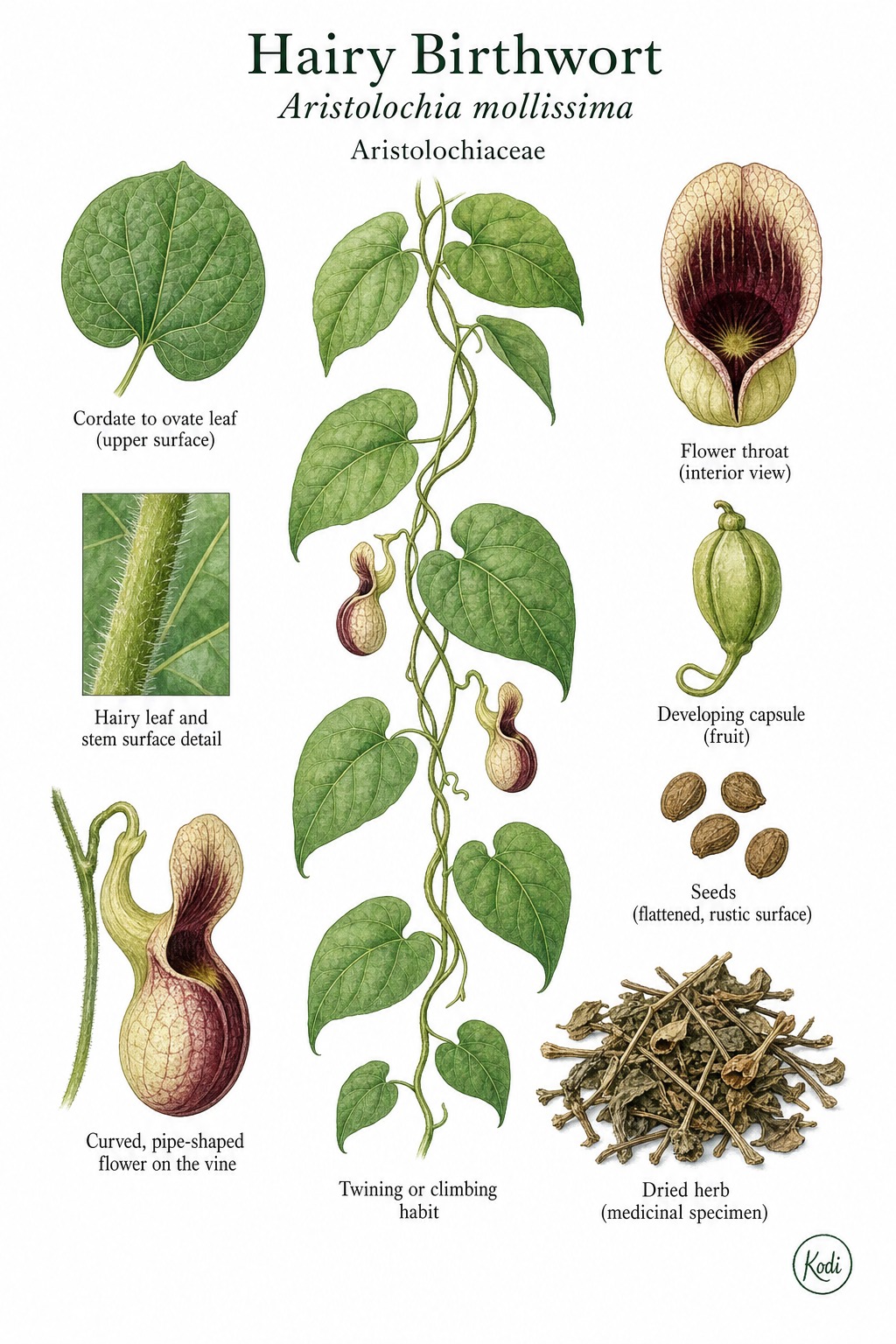
Known in TCM as Xun Gu Feng (寻骨风), this acrid and bitter, neutral herb enters the Liver and Kidney. Traditionally, it dispels wind-damp and unblocks the collaterals - Xun Gu Feng was historically used for rheumatic pain, numb limbs, stiffness, and painful obstruction affecting the joints and channels, most often applied for joint pain, rheumatism, and traumatic injury. Modern research has identified Aristolochic among its active constituents.
Part used: Whole herb
Also Known As
Latin: Herba Aristolochiae Mollissimae | Pinyin: Xun Gu Feng | Chinese: 寻骨风
TCM Properties
- Taste
- acrid, bitter
- Temperature
- neutral
- Channels
- Liver, Kidney
Traditional Use
Primary Actions
- Dispels wind-damp and unblocks the collaterals - Xun Gu Feng was historically used for rheumatic pain, numb limbs, stiffness, and painful obstruction affecting the joints and channels.
- Invigorates circulation and stops pain - traditional use extended to traumatic pain, channel tenderness, and pain that seemed fixed in the sinews and bones.
- Applied in toxic or swollen conditions - folk use includes external treatment for bites, sores, or painful swellings.
Secondary Actions
- Although the traditional actions are clear, this herb now sits under very heavy safety concern because it is an Aristolochia species containing aristolochic acids.
- For modern readers, the historical indication profile should never be separated from the serious nephrotoxic and carcinogenic risk profile.
Classic Formulas
- Xun Gu Feng with Wei Ling Xian and Qin Jiao - historical wind-damp pairing for painful obstruction and channel stiffness.
- Xun Gu Feng with Ru Xiang and Mo Yao - trauma-style combination for fixed pain and collateral obstruction.
- External washes or powders with heat-toxin or bite remedies - a safer traditional direction than uncritical internal use.
Classical References
- Traditional herb references describe Xun Gu Feng as acrid, bitter, and neutral, entering the Liver and Kidney to dispel wind-damp, unblock the collaterals, and relieve pain.
- The accepted source is Aristolochia mollissima Hance, now often treated taxonomically as Isotrema mollissimum, but the safety issues remain the same.
- This record is retained for historical and identification completeness, not as a casual endorsement of modern internal use.
Modern Research
Active Compounds
- Aristolochic acids - the dominant toxic concern and the reason this herb is heavily restricted
- Aristolactams - related nitrophenanthrene metabolites relevant to toxicity profiling
- Volatile-oil fractions - constituents with reported antimicrobial activity but also cytotoxicity
- Miscellaneous phenanthrene and terpenoid-related constituents - secondary compounds that do not offset the major aristolochic acid risk
Studied Effects
- A 2022 comparative analysis detected 44 aristolochic acids and aristolactams in Aristolochia mollissima and confirmed cytotoxic and genotoxic risk in tested extracts, strongly reinforcing the herb's modern safety problems (PMID 36548776).
- A 2015 screening paper identified aristolochic acid A in Herba Aristolochiae Mollissimae among the Aristolochia medicines tested for detoxification research, confirming the specific presence of the signature nephrotoxic constituent (PMID 26390652).
- A 2007 essential-oil study reported antimicrobial activity but also cytotoxicity, illustrating why scattered preclinical bioactivity does not make the herb acceptable to use casually (PMID 21783753).
PubMed References
- Comparative Analysis of Aristolochic Acids in Aristolochia Medicinal Herbs and Evaluation of Their Toxicities. (2022)
- [Research on biological detoxification of Chinese medicine containing aristolochic acid A by ten microorganisms]. (2015)
- Composition, antimicrobial activity and cytotoxicity of essential oils from Aristolochia mollissima. (2007)
Safety & Interactions
Contraindications
- Pregnancy, breastfeeding, or attempts to conceive
- Any kidney disease, liver disease, urothelial cancer risk, or unexplained hematuria
- Internal self-use, long-term use, or use of unverified Aristolochia products
Cautions
- Aristolochic acids are associated with irreversible nephrotoxicity, genotoxicity, and carcinogenicity.
- Many jurisdictions severely restrict or ban Aristolochia-containing products, and modern practitioners commonly avoid internal use entirely.
- Historical pain-relieving or anti-rheumatic reputation does not outweigh the known toxic risk.
Conditions
- Joint Pain Traditional ★★☆☆☆ JSON
- Rheumatism Traditional ★★☆☆☆ JSON
- Traumatic Injury Traditional ★☆☆☆☆ JSON
Frequently Asked Questions
What is Hairy Birthwort used for?
Hairy Birthwort is traditionally used to Dispels wind-damp and unblocks the collaterals - Xun Gu Feng was historically used for rheumatic pain, numb limbs, stiffness, and painful obstruction affecting the joints and channels., Invigorates circulation and stops pain - traditional use extended to traumatic pain, channel tenderness, and pain that seemed fixed in the sinews and bones., Applied in toxic or swollen conditions - folk use includes external treatment for bites, sores, or painful swellings.. Research has investigated its effects on: A 2022 comparative analysis detected 44 aristolochic acids and aristolactams in Aristolochia mollissima and confirmed cytotoxic and genotoxic risk in tested extracts, strongly reinforcing the herb's modern safety problems (PMID 36548776).; A 2015 screening paper identified aristolochic acid A in Herba Aristolochiae Mollissimae among the Aristolochia medicines tested for detoxification research, confirming the specific presence of the signature nephrotoxic constituent (PMID 26390652)..
What are other names for Hairy Birthwort?
Hairy Birthwort is also known as Aristolochia. In TCM: 寻骨风 (Xun Gu Feng); Herba Aristolochiae Mollissimae.
Is Hairy Birthwort safe during pregnancy?
The safety of Hairy Birthwort during pregnancy has not been established. Consult a qualified healthcare provider before use.
What are the contraindications for Hairy Birthwort?
Hairy Birthwort should not be used in: Pregnancy, breastfeeding, or attempts to conceive; Any kidney disease, liver disease, urothelial cancer risk, or unexplained hematuria; Internal self-use, long-term use, or use of unverified Aristolochia products. Consult a qualified practitioner before use.