Halite
- Chinese
- 岩盐
- Pinyin
- Yan Yan
- Latin
- Halitum
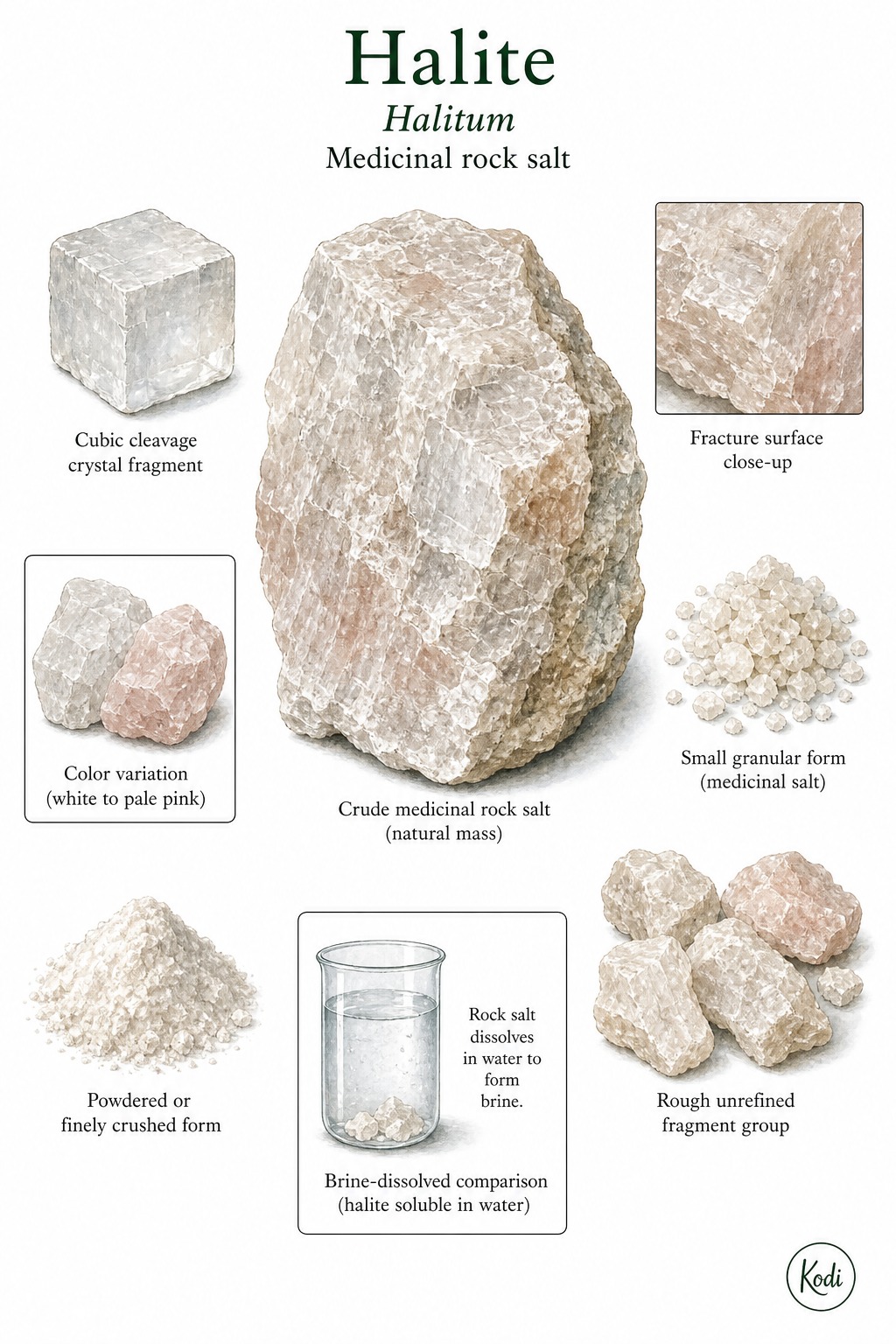
Known in TCM as Yan Yan (岩盐), this salty, cold herb enters the Heart, Kidney, and Bladder. Traditionally, it clears heat and cools the blood - medicinal halite is traditionally used for bleeding patterns such as hematuria, hematemesis, or bleeding from the mouth and gums when heat is a key feature, most often applied for hematuria, blurred vision, and constipation. Modern research has identified Sodium among its active constituents.
Also Known As
Latin: Halitum | Pinyin: Yan Yan | Chinese: 岩盐
TCM Properties
- Taste
- salty
- Temperature
- cold
- Channels
- Heart, Kidney, Bladder
Traditional Use
Primary Actions
- Clears heat and cools the blood - medicinal halite is traditionally used for bleeding patterns such as hematuria, hematemesis, or bleeding from the mouth and gums when heat is a key feature.
- Brightens the eyes - classical use includes red, swollen, painful, or blurry eyes, often in washes or other local applications.
- Moistens dryness and softens hardness - it is given in small measured doses when internal dryness and heat bind the bowels and contribute to constipation.
- Used externally for mouth, throat, and dental complaints - salt-water rinses, powders, and eye washes are a long-standing part of the halite tradition.
Secondary Actions
- Modern pharmacopoeial naming more often centers on Rong Yan, Qing Yan, or Da Qing Yan; this file keeps the imported generic pinyin while documenting the same medicinal halite family.
- This record should be read as a crude medicinal rock-salt monograph, not as an endorsement of unrestricted dietary salt use.
Classic Formulas
- Fu Ling Rong Yan Tang - the classic Jin Gui Yao Lue pairing for urinary difficulty involving halite's downward and opening action.
- Topical eye and dental applications with Qing Yan - traditional external-use pattern for red eyes, gum bleeding, and tooth pain.
- Classical salt-and-alum style powders - external or local-use combinations for throat, mouth, or hemorrhoidal complaints.
Classical References
- The National Administration of Traditional Chinese Medicine-linked Chinese medical reference platform describes medicinal halite under Rong Yan, listing aliases including Qing Yan and Yan Yan, with actions of purging heat, cooling blood, brightening the eyes, and moistening dryness.
- Traditional sources repeatedly distinguish medicinal rock salt from ordinary culinary use by emphasizing measured dosing, external applications, and heat-pattern indications.
Modern Research
Active Compounds
- Sodium chloride - the dominant mineral component responsible for salinity and osmotic effects
- Potassium, magnesium, and calcium salts - common trace mineral admixtures in crude halite
- Iron and sulfate impurities - variable non-sodium components relevant to crude-mineral identification rather than to robust therapeutic claims
Studied Effects
- Direct indexed research on medicinal halite as a TCM crude drug is sparse, and most modern discussion centers on composition, purity, and the physiologic effects of sodium salts rather than herb-specific clinical trials.
- Its traditional moistening and opening uses are most plausibly interpreted through osmotic and mineral effects, but that remains an inference rather than a well-tested modern evidence base for the crude medicinal material.
Safety & Interactions
Contraindications
- Edema or fluid-retention states
- Conditions requiring strict sodium restriction
- Vomiting according to traditional contraindication notes
Cautions
- Medicinal halite is not the same thing as unrestricted dietary salt, and excessive sodium intake can aggravate hypertension, renal disease, and fluid retention.
- Crude mineral quality matters because halite may contain variable impurities and should come from a trusted medicinal source.
- Modern herb-specific evidence is thin, so claims should stay conservative and close to established traditional use.
Conditions
- Hematuria Traditional ★★☆☆☆ JSON
- Blurred Vision Traditional ★★☆☆☆ JSON
- Constipation Traditional ★★☆☆☆ JSON
Frequently Asked Questions
What is Halite used for?
Halite is traditionally used to Clears heat and cools the blood - medicinal halite is traditionally used for bleeding patterns such as hematuria, hematemesis, or bleeding from the mouth and gums when heat is a key feature., Brightens the eyes - classical use includes red, swollen, painful, or blurry eyes, often in washes or other local applications., Moistens dryness and softens hardness - it is given in small measured doses when internal dryness and heat bind the bowels and contribute to constipation., Used externally for mouth, throat, and dental complaints - salt-water rinses, powders, and eye washes are a long-standing part of the halite tradition.. Research has investigated its effects on: Direct indexed research on medicinal halite as a TCM crude drug is sparse, and most modern discussion centers on composition, purity, and the physiologic effects of sodium salts rather than herb-specific clinical trials.; Its traditional moistening and opening uses are most plausibly interpreted through osmotic and mineral effects, but that remains an inference rather than a well-tested modern evidence base for the crude medicinal material..
What are other names for Halite?
Halite is also known as Rock Salt, Qing Yan, Rong Yan. In TCM: 岩盐 (Yan Yan); Halitum.
Is Halite safe during pregnancy?
The safety of Halite during pregnancy has not been established. Consult a qualified healthcare provider before use.
What are the contraindications for Halite?
Halite should not be used in: Edema or fluid-retention states; Conditions requiring strict sodium restriction; Vomiting according to traditional contraindication notes. Consult a qualified practitioner before use.