Hangzhou Alum
- Chinese
- 杭矾
- Pinyin
- Hang Fan
- Latin
- Alumen
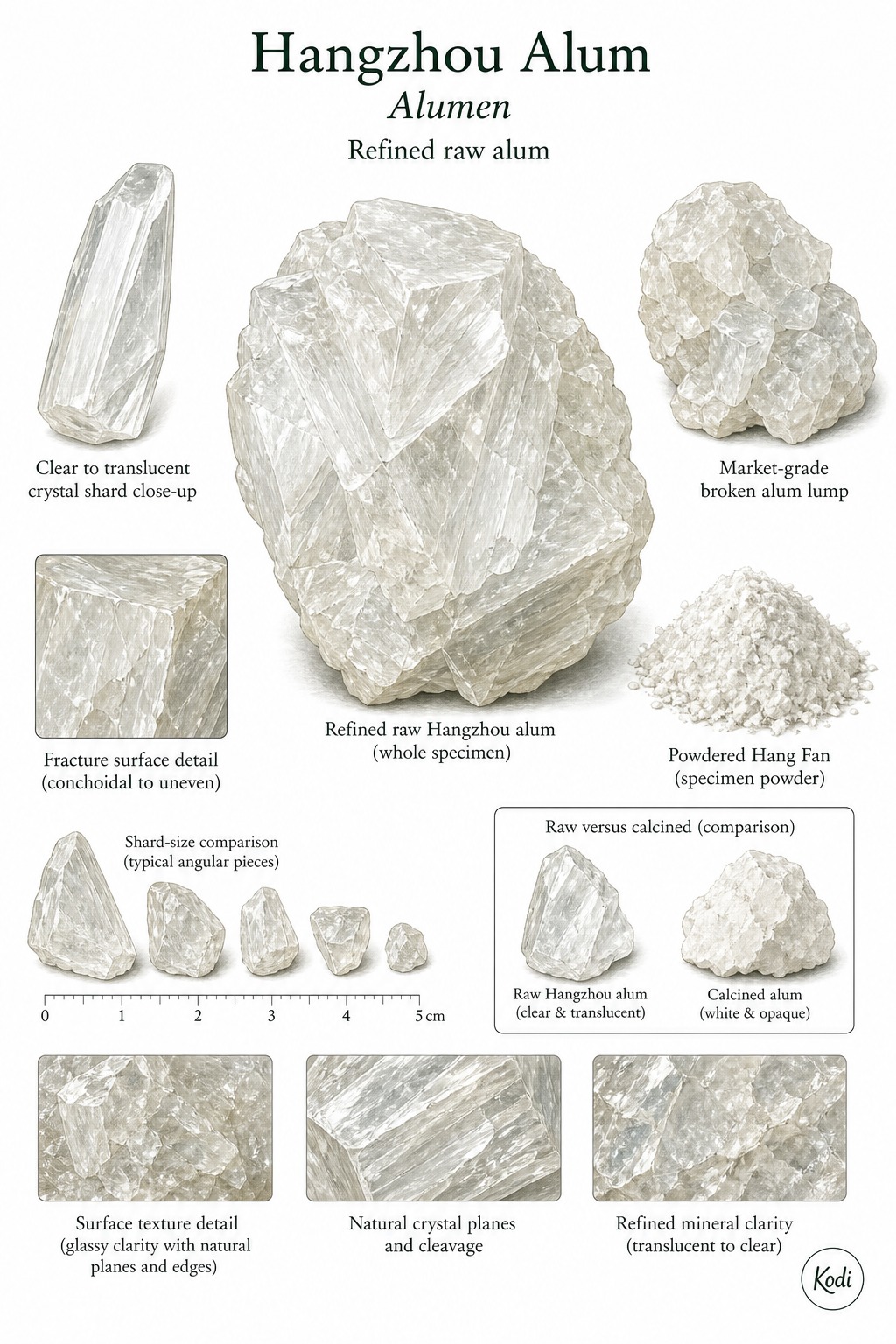
Known in TCM as Hang Fan (杭矾), this sour and astringent, cold herb enters the Lung, Spleen, Large Intestine, and Liver. Traditionally, it dries dampness and stops discharge - Hang Fan follows the broader alum tradition in treating diarrhea, dysentery, leucorrhea, and overly weeping damp lesions, most often applied for dysentery, leucorrhea, and hemorrhoids. Modern research has identified Potassium among its active constituents.
Part used: Alum
Also Known As
Latin: Alumen | Pinyin: Hang Fan | Chinese: 杭矾
TCM Properties
- Taste
- sour, astringent
- Temperature
- cold
- Channels
- Lung, Spleen, Large Intestine, Liver
Traditional Use
Primary Actions
- Dries dampness and stops discharge - Hang Fan follows the broader alum tradition in treating diarrhea, dysentery, leucorrhea, and overly weeping damp lesions.
- Resolves toxicity and kills parasites - topical use extends to tinea, scabies, damp erosions, and infected or itching lesions that need a strongly drying mineral.
- Shrinks tissue and stops bleeding - like other alum forms, it is used for oozing sores, bleeding hemorrhoids, and minor mucosal or tissue bleeding where astringency is desired.
- Transforms phlegm and opens the orifices in older formula tradition - the same historical logic seen with Bai Fan applies here, although modern practice is much more cautious with internal use.
Secondary Actions
- This record treats Hang Fan as a refined or regional alum specification rather than as a different pharmacologic substance from Bai Fan.
- It should also remain distinct from Duan Bai Fan, because raw or refined alum and calcined alum do not behave the same way clinically.
Classic Formulas
- Bai Fan San logic - the alum-and-pig-bile pairing for phlegm-type epilepsy and old orifice-opening use.
- Topical alum washes and powders - traditional strategy for damp skin disease, weeping lesions, and itching.
- Hemorrhoid and prolapse applications with astringent wound powders - local-use formulas where alum's protein-precipitating action is the point.
Classical References
- Modern Chinese reference material on Ming Fan and the older Bai Fan tradition describes alum as sour, astringent, and cold, used to dry dampness, stop discharge, kill parasites, and arrest bleeding.
- Hang Fan is best understood as a refined Hangzhou-associated alum designation carried in the import, not as a wholly separate mineral drug.
Modern Research
Active Compounds
- Potassium aluminum sulfate - the core refined alum constituent
- Aluminum ions - central to the protein-precipitating and tissue-contracting effect
- Sulfate ions - contribute to the desiccating and antimicrobial environment
Studied Effects
- Conventional potassium alum literature documents strong local astringent and hemostatic effects through protein precipitation and tissue contraction, which closely fits the classical drying and bleeding-stopping use of medicinal alum preparations (PMID 2193606).
- Older antimicrobial literature reported control of mycotic dermatitis with potassium aluminium sulfate, supporting the long-standing external use of alum for damp fungal and erosive skin conditions (PMID 14331483).
- Experimental pharmacology found inhibitory effects of potassium alum on rabbit smooth muscle contraction, illustrating why older internal uses persisted historically even though modern use is usually more limited and cautious (PMID 25012630).
PubMed References
- [Treatment of hemorrhagic cystitis caused by cyclophosphamide using intravesical instillation of potassium alum. Apropos of 5 cases] (1990)
- CONTROL OF MYCOTIC DERMATITIS WITH POTASSIUM ALUMINIUM SULPHATE (1965)
- Inhibitory effect of potassium alum on smooth muscle contraction of rabbit and its mechanism (2014)
Safety & Interactions
Contraindications
- Long-term internal use
- Dry deficiency states without dampness or phlegm
- Chronic kidney disease or other situations where aluminum exposure is a major concern
Cautions
- Internal use of alum should be short term and carefully supervised because the same astringent chemistry that gives benefit can also irritate tissues and contribute to aluminum exposure.
- This record refers to a raw or refined alum form, not the more dehydrated calcined external-use preparation Duan Bai Fan.
- Quality control matters because poorly sourced mineral material may carry impurities beyond the expected alum profile.
Conditions
- Dysentery Traditional ★★★☆☆ JSON
- Leucorrhea Traditional ★★★☆☆ JSON
- Hemorrhoids Traditional ★★★☆☆ JSON
- Eczema Traditional ★★★☆☆ JSON
Frequently Asked Questions
What is Hangzhou Alum used for?
Hangzhou Alum is traditionally used to Dries dampness and stops discharge - Hang Fan follows the broader alum tradition in treating diarrhea, dysentery, leucorrhea, and overly weeping damp lesions., Resolves toxicity and kills parasites - topical use extends to tinea, scabies, damp erosions, and infected or itching lesions that need a strongly drying mineral., Shrinks tissue and stops bleeding - like other alum forms, it is used for oozing sores, bleeding hemorrhoids, and minor mucosal or tissue bleeding where astringency is desired., Transforms phlegm and opens the orifices in older formula tradition - the same historical logic seen with Bai Fan applies here, although modern practice is much more cautious with internal use.. Research has investigated its effects on: Conventional potassium alum literature documents strong local astringent and hemostatic effects through protein precipitation and tissue contraction, which closely fits the classical drying and bleeding-stopping use of medicinal alum preparations (PMID 2193606).; Older antimicrobial literature reported control of mycotic dermatitis with potassium aluminium sulfate, supporting the long-standing external use of alum for damp fungal and erosive skin conditions (PMID 14331483)..
What are other names for Hangzhou Alum?
Hangzhou Alum is also known as Refined Alum, Bai Fan Variant. In TCM: 杭矾 (Hang Fan); Alumen.
Is Hangzhou Alum safe during pregnancy?
The safety of Hangzhou Alum during pregnancy has not been established. Consult a qualified healthcare provider before use.
What are the contraindications for Hangzhou Alum?
Hangzhou Alum should not be used in: Long-term internal use; Dry deficiency states without dampness or phlegm; Chronic kidney disease or other situations where aluminum exposure is a major concern. Consult a qualified practitioner before use.