Hematite, Red Ochre
- Chinese
- 代赭石
- Pinyin
- Dai Zhe Shi
- Latin
- Haematitum
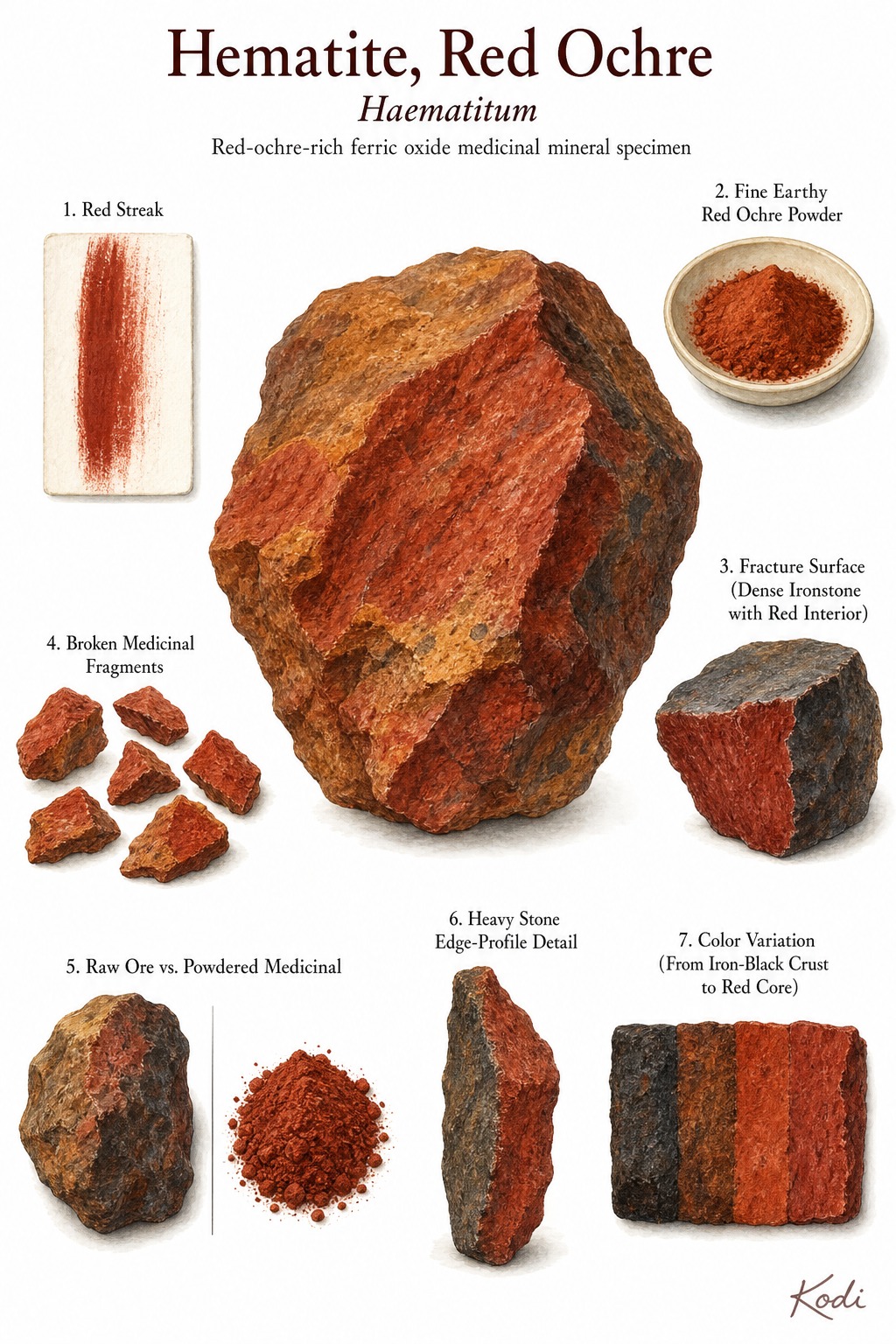
Known in TCM as Dai Zhe Shi (代赭石), this bitter, cold herb enters the Liver and Heart. Traditionally, it calms the Liver and anchors rising Yang - Dai Zhe Shi is a standard heavy mineral for dizziness, tinnitus, red eyes, and headache from Liver-Yang ascent or Liver-fire agitation, most often applied for nausea, wheezing, and hypertension. Modern research has identified Ferric among its active constituents.
Part used: Haematite
Also Known As
Latin: Haematitum | Pinyin: Dai Zhe Shi | Chinese: 代赭石
TCM Properties
- Taste
- bitter
- Temperature
- cold
- Channels
- Liver, Heart
Traditional Use
Primary Actions
- Calms the Liver and anchors rising Yang - Dai Zhe Shi is a standard heavy mineral for dizziness, tinnitus, red eyes, and headache from Liver-Yang ascent or Liver-fire agitation.
- Heavily settles counterflow and redirects rebellious qi downward - it is especially valued for vomiting, hiccup, belching, and wheezing when Stomach or Lung qi refuses to descend.
- Cools the blood and helps stop bleeding - classical use includes heat-driven vomiting of blood, nosebleeds, and uterine bleeding where an upward surging pattern accompanies the blood-heat.
Secondary Actions
- Compared with the shorter alias Zhe Shi, Dai Zhe Shi is the full teaching name most often attached to formulas and modern materia medica entries.
- Raw use is favored for descending counterflow and calming Yang, while processed or calcined-vinegared forms appear more often in special preparation contexts.
Classic Formulas
- Xuan Fu Dai Zhe Tang - the classic formula for stubborn belching, nausea, and focal fullness from mixed deficiency and counterflow.
- Zhen Gan Xi Feng Tang - hallmark use for rising Liver Yang and internal-wind patterns with dizziness and instability.
- Shen Zhe Zhen Qi Tang and related descending formulas - later use when deficiency and severe upward rebellion coexist.
Classical References
- The official Chinese medical reference platform describes Dai Zhe Shi as bitter and cold, entering the Liver and Heart, with actions of calming the Liver, anchoring Yang, settling counterflow, and cooling blood to stop bleeding.
- Traditional comparison with Ci Shi highlights that Dai Zhe Shi is particularly strong for Stomach and Lung counterflow, not just for anchoring rising Yang.
Modern Research
Active Compounds
- Ferric oxide - the main constituent of medicinal hematite
- Trace elements including manganese, magnesium, chromium, and copper - variable mineral components discussed in reference material
- Potential lead and arsenic impurities - important quality and toxicology concerns
Studied Effects
- Modern herb-specific clinical research is limited, and current discussion focuses more on composition, processing, and impurity control than on contemporary trial evidence for crude Dai Zhe Shi.
- Reference pharmacology summaries attribute sedative effects, support for hematopoiesis through iron content, and stimulation of intestinal motility, but these remain secondary to the much older traditional evidence base.
Safety & Interactions
Contraindications
- Pregnancy without qualified supervision
- Deficiency-cold patterns without clear upward rebellion
- Unscreened mineral material
Cautions
- Reference material warns that crude Dai Zhe Shi may contain arsenic and other undesirable mineral impurities, so source quality matters.
- Because it is heavy and strongly descending, it should be used in formula context rather than as a casual standalone home remedy.
- Digestive irritation is possible with excessive or prolonged use.
Drug Interactions
- Tetracycline-class antibiotics - likely absorption-reducing chelation or mineral binding.
- Isoniazid or rifampin - traditional reference sources caution against combined use.
- Prednisolone - reference material warns of reduced bioavailability with combination.
Conditions
- Nausea Traditional ★★★★☆ JSON
- Wheezing Traditional ★★★☆☆ JSON
- Hypertension Traditional ★★★☆☆ JSON
- Abnormal Uterine Bleeding Traditional ★★☆☆☆ JSON
Frequently Asked Questions
What is Hematite, Red Ochre used for?
Hematite, Red Ochre is traditionally used to Calms the Liver and anchors rising Yang - Dai Zhe Shi is a standard heavy mineral for dizziness, tinnitus, red eyes, and headache from Liver-Yang ascent or Liver-fire agitation., Heavily settles counterflow and redirects rebellious qi downward - it is especially valued for vomiting, hiccup, belching, and wheezing when Stomach or Lung qi refuses to descend., Cools the blood and helps stop bleeding - classical use includes heat-driven vomiting of blood, nosebleeds, and uterine bleeding where an upward surging pattern accompanies the blood-heat.. Research has investigated its effects on: Modern herb-specific clinical research is limited, and current discussion focuses more on composition, processing, and impurity control than on contemporary trial evidence for crude Dai Zhe Shi.; Reference pharmacology summaries attribute sedative effects, support for hematopoiesis through iron content, and stimulation of intestinal motility, but these remain secondary to the much older traditional evidence base..
What are other names for Hematite, Red Ochre?
Hematite, Red Ochre is also known as Hematite, Ding Tou Zhe Shi. In TCM: 代赭石 (Dai Zhe Shi); Haematitum.
Is Hematite, Red Ochre safe during pregnancy?
The safety of Hematite, Red Ochre during pregnancy has not been established. Consult a qualified healthcare provider before use.
What are the contraindications for Hematite, Red Ochre?
Hematite, Red Ochre should not be used in: Pregnancy without qualified supervision; Deficiency-cold patterns without clear upward rebellion; Unscreened mineral material. Consult a qualified practitioner before use.
Does Hematite, Red Ochre interact with any medications?
Hematite, Red Ochre may interact with: Tetracycline-class antibiotics - likely absorption-reducing chelation or mineral binding.; Isoniazid or rifampin - traditional reference sources caution against combined use.; Prednisolone - reference material warns of reduced bioavailability with combination.. Always inform your healthcare provider of any herbal supplements you are taking.