Hempleaf Negundo Chastetree Leaf
- Chinese
- 牡荆叶
- Pinyin
- Mu Jing Ye
- Latin
- Folium Viticis Negundo
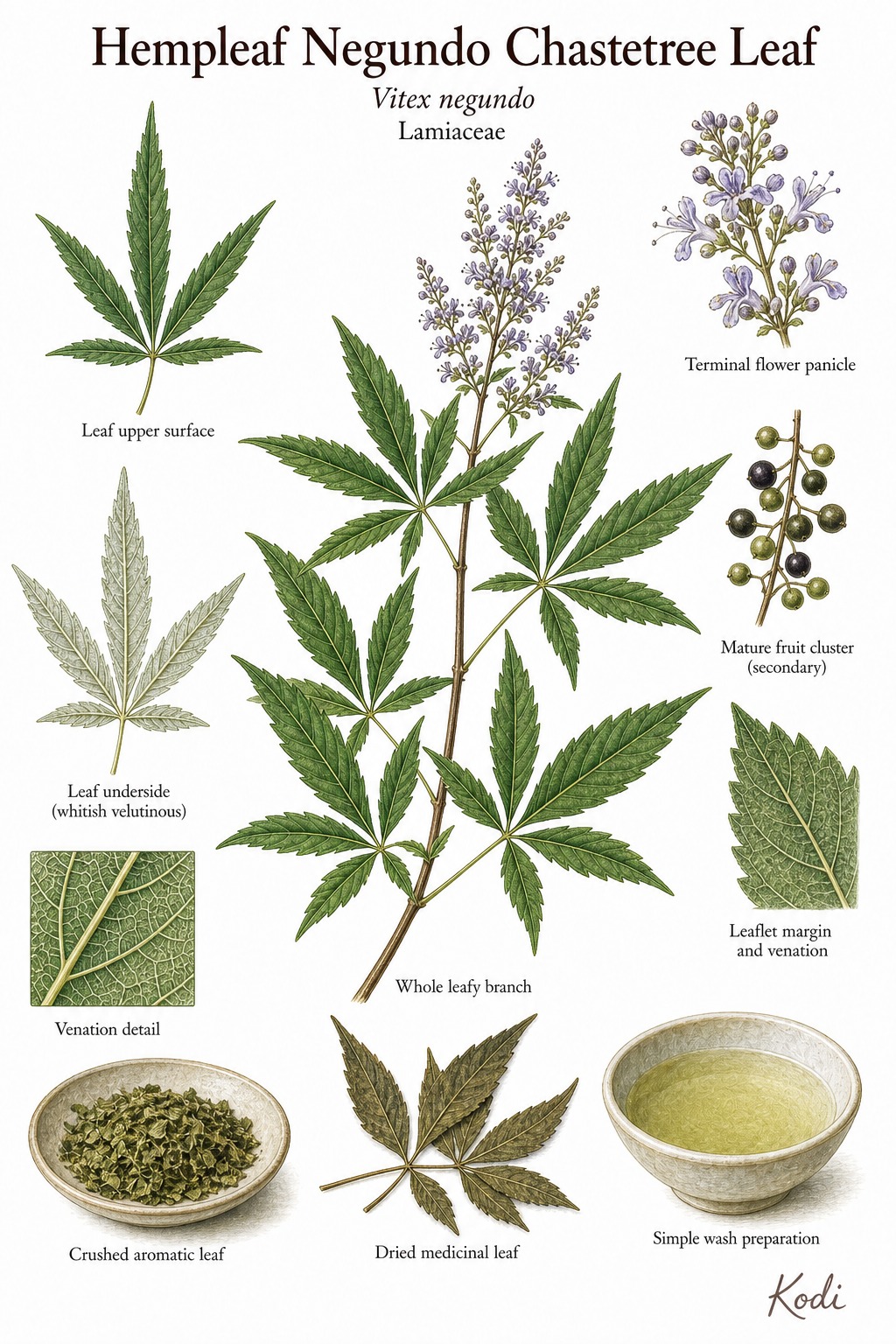
Known in TCM as Mu Jing Ye (牡荆叶), this acrid and bitter, neutral herb enters the Lung, Liver, and Stomach. Traditionally, it releases the exterior and transforms dampness - Mu Jing Ye is used for wind-cold or damp-type early illness with headache, heaviness, body discomfort, and lingering exterior obstruction, most often applied for productive cough, wheezing, and upper respiratory infection. Modern research has identified Volatile-oil among its active constituents.
Part used: Leaf
Also Known As
Latin: Folium Viticis Negundo | Pinyin: Mu Jing Ye | Chinese: 牡荆叶
TCM Properties
- Taste
- acrid, bitter
- Temperature
- neutral
- Channels
- Lung, Liver, Stomach
Traditional Use
Primary Actions
- Releases the exterior and transforms dampness - Mu Jing Ye is used for wind-cold or damp-type early illness with headache, heaviness, body discomfort, and lingering exterior obstruction.
- Transforms phlegm and calms wheezing - traditional indications include cough, abundant phlegm, and asthma-like breathing difficulty.
- Regulates the middle and relieves pain - older use extends to abdominal pain, damp summer disorders, and dysenteric or gastroenteritic patterns.
- Resolves toxicity and relieves itching - external use includes rashes, foot fungal conditions, swollen breasts, and bites or minor toxic swellings.
Secondary Actions
- This leaf record should stay distinct from the far better-known fruit medicines in the Vitex group; the plant part materially changes the traditional profile.
- Mu Jing Ye sits closer to an aromatic leaf medicine with respiratory and dampness applications than to a simple flavor variant of Mu Jing Zi.
Classic Formulas
- Leaf-decoction exterior and cough treatments - traditional use for wind-cold with phlegm or wheezing.
- Mu Jing Ye washes and poultices - local-use strategy for itching, damp skin problems, and toxic swelling.
- Respiratory combinations with qi-descending or phlegm-transforming herbs - the practical pattern when cough and wheeze dominate.
Classical References
- The official Chinese reference platform describes Mu Jing Ye as pungent, bitter, and neutral, with actions of releasing the exterior, transforming dampness, relieving wheezing, and resolving toxicity.
- Broader Chinese materia medica summaries place the leaf in a Lung-Liver-Stomach style pattern space, reflecting its use for respiratory, damp, and pain presentations.
Modern Research
Active Compounds
- Volatile-oil constituents including caryophyllene-related and cineole-related fractions - major aromatic components of the leaf
- Flavonoids and phenolic compounds - repeatedly cited anti-inflammatory candidates
- Iridoid or glycosidic constituents such as negundoside-related fractions - supportive bioactive markers in Vitex negundo research
- Terpenoid fractions - broad secondary-metabolite group relevant to analgesic and anti-inflammatory literature
Studied Effects
- A 2025 comparison of medicinal parts from Vitex negundo var. cannabifolia found that the stems-and-leaves extract showed anti-inflammatory and analgesic activity in tested arthritis and edema models, helping support the traditional use of the leaf-bearing aerial parts (PMID 40532984).
- A 2012 rat study reported that Vitex negundo leaf oil inhibited COX-2 and inflammatory cytokine-mediated paw edema, giving a plausible mechanistic correlate for its older pain and wheezing uses (PMID 22923950).
- A 2014 mouse study found antiestrogenic and anti-inflammatory activity in a leaf fraction and specifically linked it to implantation failure risk, which is important modern context for pregnancy caution (PMID 27351007).
PubMed References
- Comparison in chemical constituents and anti-inflammatory and analgesic effects of different medicinal parts from a Vitex negundo L. var. cannabifolia. (2025)
- Vitex negundo inhibits cyclooxygenase-2 inflammatory cytokine-mediated inflammation on carrageenan-induced rat hind paw edema. (2012)
- Antiestrogenic and Anti-Inflammatory Potential of n-Hexane Fraction of Vitex negundo Linn Leaf Extract: A Probable Mechanism for Blastocyst Implantation Failure in Mus musculus. (2014)
Safety & Interactions
Contraindications
- Pregnancy or attempts to conceive
- Dry cough or internal heat without the damp, phlegm, or exterior pattern this herb is meant for
Cautions
- Leaf extracts showed anti-implantation activity in an animal study, so pregnancy caution should be taken seriously rather than treated as a routine boilerplate warning.
- Most modern evidence remains preclinical and should not be overstated into strong clinical claims.
- Aromatic leaf preparations can vary substantially by extraction method, so supplement products are not interchangeable with ordinary decoction use.
Conditions
- Productive Cough Traditional ★★★☆☆ JSON
- Wheezing Traditional ★★★☆☆ JSON
- Upper Respiratory Infection Traditional ★★☆☆☆ JSON
- Pharyngitis Traditional ★★☆☆☆ JSON
Frequently Asked Questions
What is Hempleaf Negundo Chastetree Leaf used for?
Hempleaf Negundo Chastetree Leaf is traditionally used to Releases the exterior and transforms dampness - Mu Jing Ye is used for wind-cold or damp-type early illness with headache, heaviness, body discomfort, and lingering exterior obstruction., Transforms phlegm and calms wheezing - traditional indications include cough, abundant phlegm, and asthma-like breathing difficulty., Regulates the middle and relieves pain - older use extends to abdominal pain, damp summer disorders, and dysenteric or gastroenteritic patterns., Resolves toxicity and relieves itching - external use includes rashes, foot fungal conditions, swollen breasts, and bites or minor toxic swellings.. Research has investigated its effects on: A 2025 comparison of medicinal parts from Vitex negundo var. cannabifolia found that the stems-and-leaves extract showed anti-inflammatory and analgesic activity in tested arthritis and edema models, helping support the traditional use of the leaf-bearing aerial parts (PMID 40532984).; A 2012 rat study reported that Vitex negundo leaf oil inhibited COX-2 and inflammatory cytokine-mediated paw edema, giving a plausible mechanistic correlate for its older pain and wheezing uses (PMID 22923950)..
What are other names for Hempleaf Negundo Chastetree Leaf?
Hempleaf Negundo Chastetree Leaf is also known as Viticis Negundo Folium, Vitex negundo Leaf. In TCM: 牡荆叶 (Mu Jing Ye); Folium Viticis Negundo.
Is Hempleaf Negundo Chastetree Leaf safe during pregnancy?
The safety of Hempleaf Negundo Chastetree Leaf during pregnancy has not been established. Consult a qualified healthcare provider before use.
What are the contraindications for Hempleaf Negundo Chastetree Leaf?
Hempleaf Negundo Chastetree Leaf should not be used in: Pregnancy or attempts to conceive; Dry cough or internal heat without the damp, phlegm, or exterior pattern this herb is meant for. Consult a qualified practitioner before use.