Hirsute Shiny Bugleweed Herb
- Chinese
- 泽兰
- Pinyin
- Ze Lan
- Latin
- Herba Lycopi
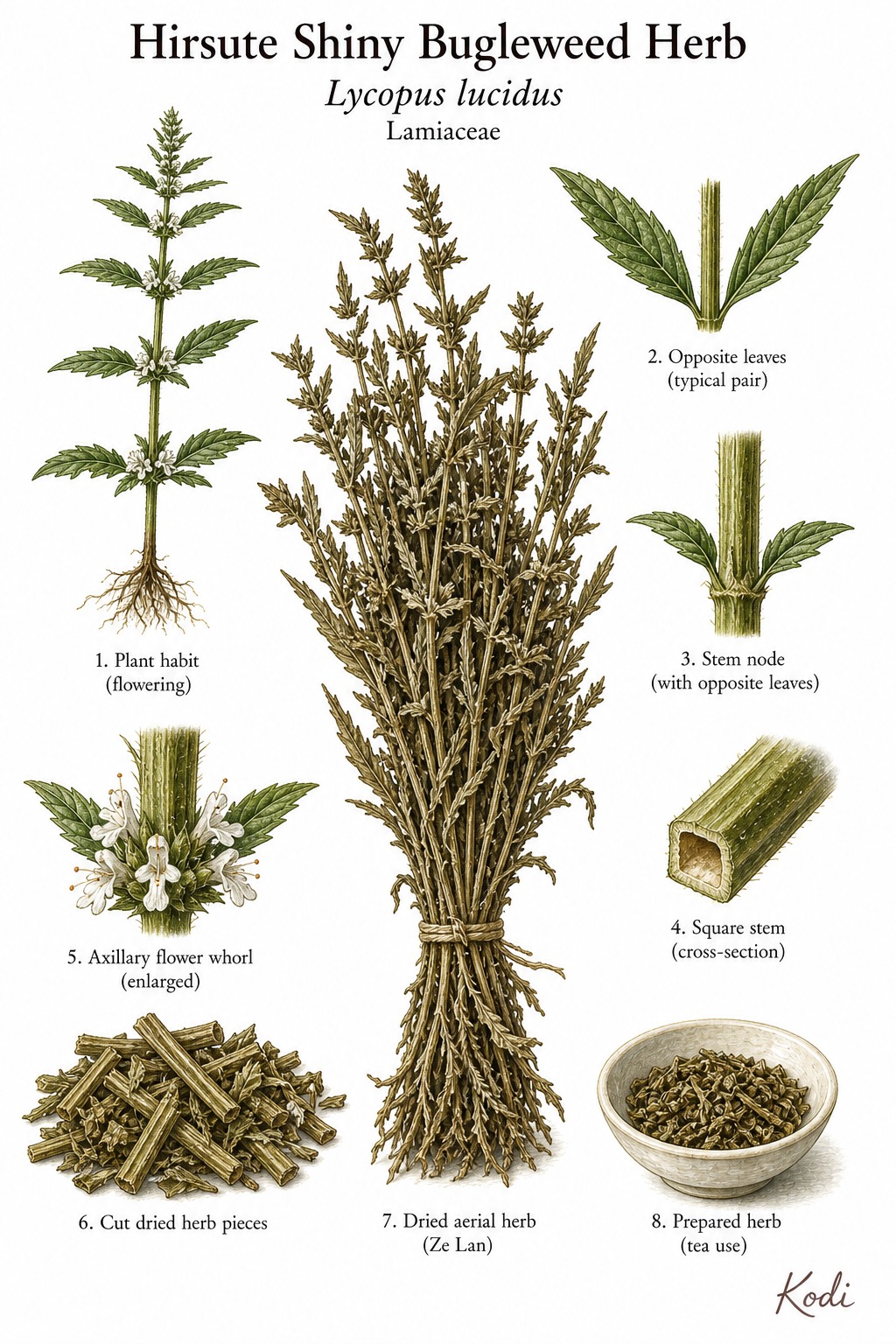
Known in TCM as Ze Lan (泽兰), this bitter and acrid, slightly warm herb enters the Liver and Spleen. Traditionally, it invigorates blood and regulates menstruation - Ze Lan is classically used for delayed menses, irregular cycles, dysmenorrhea, postpartum abdominal pain, and other gynecologic complaints rooted in blood stasis, most often applied for menstrual irregularities, dysmenorrhea, and edema. Modern research has identified Rosmarinic among its active constituents.
Part used: Whole herb
Also Known As
Latin: Herba Lycopi | Pinyin: Ze Lan | Chinese: 泽兰
TCM Properties
- Taste
- bitter, acrid
- Temperature
- slightly warm
- Channels
- Liver, Spleen
Traditional Use
Primary Actions
- Invigorates blood and regulates menstruation - Ze Lan is classically used for delayed menses, irregular cycles, dysmenorrhea, postpartum abdominal pain, and other gynecologic complaints rooted in blood stasis.
- Promotes urination and reduces swelling - it is especially valued when edema, water retention, or postpartum swelling coexist with impaired blood movement rather than with simple dampness alone.
- Dispels stasis and helps resolve swelling or early abscess patterns - older use extends to traumatic pain, localized swelling, and sore or tender masses where movement of blood is needed.
Secondary Actions
- This standard Ze Lan record covers the broader dried aerial herb identity, while the immediately previous Ze Lan Ye page preserves the lighter leaf or tea-forward usage layer.
- Ze Lan is traditionally considered more moving and clinically central than the leaf-only presentation, but still gentler than the strongest blood-breaking herbs.
Classic Formulas
- Ze Lan Tang lineages - traditional gynecologic strategy for menstruation problems and postpartum stasis.
- Pairings with Fang Ji for postpartum edema - a classic-style combination when blood stasis and water retention overlap.
- Ze Lan with Dang Gui, Dan Shen, or Yi Mu Cao - common blood-regulating pattern logic for menstrual pain, abdominal masses, or retained postpartum stasis.
Classical References
- Official Chinese references describe Ze Lan as bitter, acrid, and slightly warm, entering the Liver and Spleen to invigorate blood, regulate menstruation, promote urination, and reduce swelling.
- Traditional teaching repeatedly places Ze Lan in postpartum and gynecologic formulas because it moves blood and fluids together without being as harsh as some stronger stasis-dispelling herbs.
Modern Research
Active Compounds
- Rosmarinic acid and related phenolics - anti-inflammatory constituents commonly discussed in Lycopus research
- Pimarane and abietane diterpenoids - notable aerial-part constituents with antimicrobial and signaling interest
- Flavonoids - supportive compounds relevant to vascular and anti-inflammatory studies
- Volatile-oil fractions - part of the herb's aromatic and antimicrobial chemistry
Studied Effects
- A 2021 study found Lycopus lucidus reduced neuroinflammatory signaling through NLRP3 inflammasome inhibition in cortical-neuron work, supporting ongoing anti-inflammatory interest in the species (PMID 33981154).
- A 2005 mast-cell study reported anti-allergic effects of Lycopus lucidus, providing another preclinical bridge to the herb's traditional use in inflammatory conditions (PMID 15936049).
- A 2022 phytochemical paper isolated pimarane diterpenoids from the aerial parts of Lycopus lucidus and reported antimicrobial activity, reinforcing the relevance of the whole-herb aerial drug rather than the leaf alone (PMID 35154345).
PubMed References
- Lycopus lucidus Turcz Exerts Neuroprotective Effects Against H2O2-Induced Neuroinflammation by Inhibiting NLRP3 Inflammasome Activation in Cortical Neurons (2021)
- Anti-allergic effects of Lycopus lucidus on mast cell-mediated allergy model (2005)
- Pimarane Diterpenoids from Aerial Parts of Lycopus lucidus and Their Antimicrobial Activity (2022)
Safety & Interactions
Contraindications
- Pregnancy without professional guidance
- Marked blood deficiency without stasis
- Active bleeding tendency without a clear blood-stasis pattern
Cautions
- Because Ze Lan moves blood, it deserves caution in pregnancy and in patients who bruise or bleed easily.
- Official Chinese references caution concurrent use with cardiac glycosides and advise restraint with anticoagulant or antiplatelet medicines.
- Most modern evidence remains preclinical and should not be overextended into strong stand-alone claims.
Drug Interactions
- Cardiac glycosides - official Chinese references warn of possible increased adverse effects.
- Anticoagulant or antiplatelet drugs - excessive concurrent use may increase bleeding tendency.
Conditions
- Menstrual Irregularities Traditional ★★★★☆ JSON
- Dysmenorrhea Traditional ★★★☆☆ JSON
- Edema Traditional ★★★☆☆ JSON
- Traumatic Injury Traditional ★★☆☆☆ JSON
Frequently Asked Questions
What is Hirsute Shiny Bugleweed Herb used for?
Hirsute Shiny Bugleweed Herb is traditionally used to Invigorates blood and regulates menstruation - Ze Lan is classically used for delayed menses, irregular cycles, dysmenorrhea, postpartum abdominal pain, and other gynecologic complaints rooted in blood stasis., Promotes urination and reduces swelling - it is especially valued when edema, water retention, or postpartum swelling coexist with impaired blood movement rather than with simple dampness alone., Dispels stasis and helps resolve swelling or early abscess patterns - older use extends to traumatic pain, localized swelling, and sore or tender masses where movement of blood is needed.. Research has investigated its effects on: A 2021 study found Lycopus lucidus reduced neuroinflammatory signaling through NLRP3 inflammasome inhibition in cortical-neuron work, supporting ongoing anti-inflammatory interest in the species (PMID 33981154).; A 2005 mast-cell study reported anti-allergic effects of Lycopus lucidus, providing another preclinical bridge to the herb's traditional use in inflammatory conditions (PMID 15936049)..
What are other names for Hirsute Shiny Bugleweed Herb?
Hirsute Shiny Bugleweed Herb is also known as Lycopi, Bugleweed Herb. In TCM: 泽兰 (Ze Lan); Herba Lycopi.
Is Hirsute Shiny Bugleweed Herb safe during pregnancy?
The safety of Hirsute Shiny Bugleweed Herb during pregnancy has not been established. Consult a qualified healthcare provider before use.
What are the contraindications for Hirsute Shiny Bugleweed Herb?
Hirsute Shiny Bugleweed Herb should not be used in: Pregnancy without professional guidance; Marked blood deficiency without stasis; Active bleeding tendency without a clear blood-stasis pattern. Consult a qualified practitioner before use.
Does Hirsute Shiny Bugleweed Herb interact with any medications?
Hirsute Shiny Bugleweed Herb may interact with: Cardiac glycosides - official Chinese references warn of possible increased adverse effects.; Anticoagulant or antiplatelet drugs - excessive concurrent use may increase bleeding tendency.. Always inform your healthcare provider of any herbal supplements you are taking.