Honey
- Chinese
- 蜂蜜
- Pinyin
- Feng Mi
- Latin
- Mel
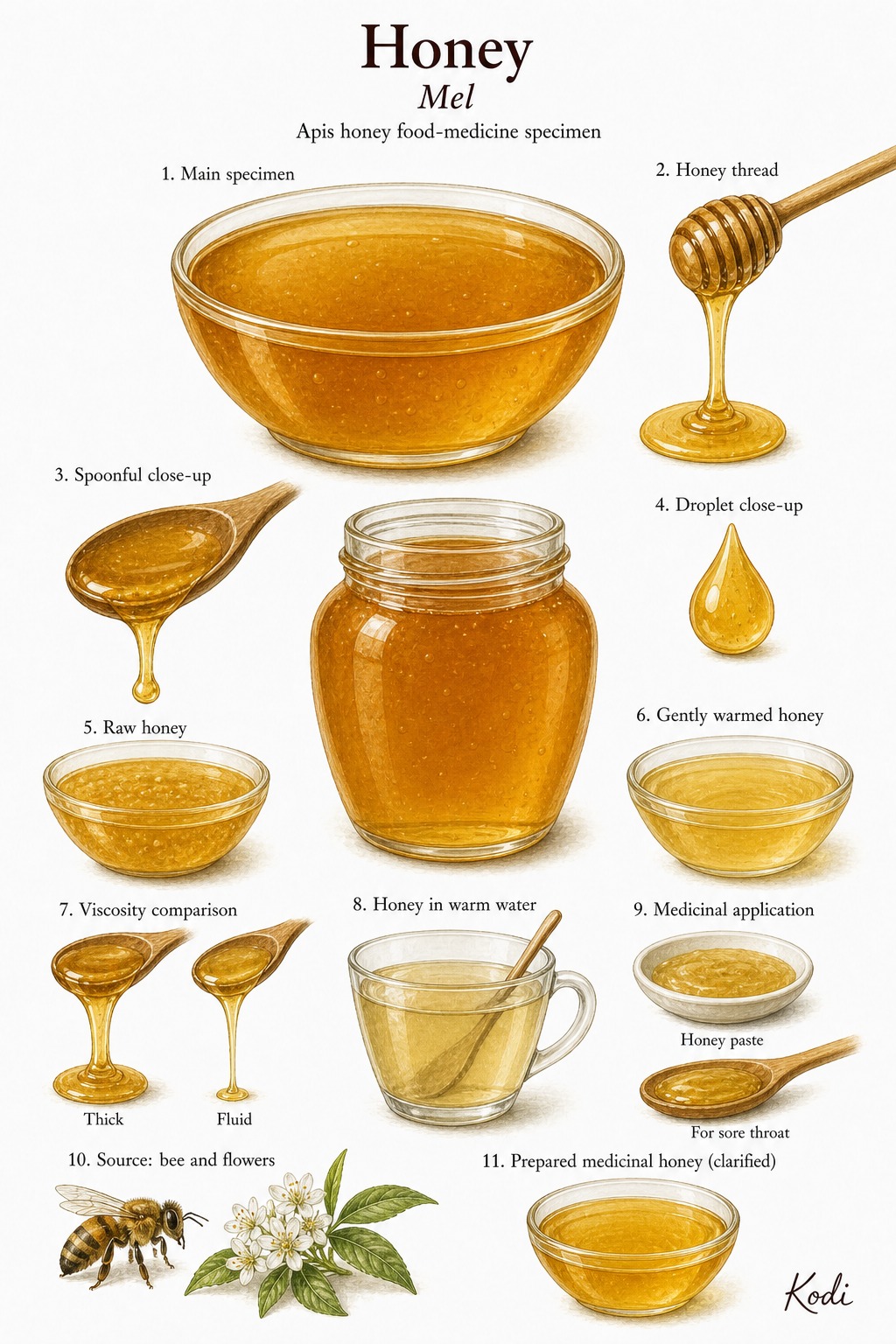
Known in TCM as Feng Mi (蜂蜜), this sweet, neutral herb enters the Lung, Spleen, and Large Intestine. Traditionally, it tonifies the middle and supplements qi - Feng Mi is used for weakness, poor appetite, dry fatigue, and convalescent states where a food-medicine tonic is preferred over a stronger herb, most often applied for dry cough, constipation, and abdominal pain. Modern research has identified Fructose among its active constituents.
Part used: Honey
Also Known As
Latin: Mel | Pinyin: Feng Mi | Chinese: 蜂蜜
TCM Properties
- Taste
- sweet
- Temperature
- neutral
- Channels
- Lung, Spleen, Large Intestine
Traditional Use
Primary Actions
- Tonifies the middle and supplements qi - Feng Mi is used for weakness, poor appetite, dry fatigue, and convalescent states where a food-medicine tonic is preferred over a stronger herb.
- Moistens dryness and stops cough - traditional use includes Lung dryness, dry cough, throat irritation, and hoarseness when soothing lubrication is needed.
- Moistens the intestines and relieves constipation - it is a classic gentle choice for dry-pattern constipation, especially in the elderly, postpartum, or depleted patient.
- Relieves pain, resolves toxin, and promotes healing externally - honey is also used on sores, burns, fissures, and ulcerative lesions to soothe, protect, and generate flesh.
Secondary Actions
- Feng Mi is both a direct medicine and a major pharmaceutical excipient, shaping pill-making and honey-frying methods throughout the materia medica.
- Traditional sources distinguish raw honey's more cooling and detoxifying side from cooked honey's more tonifying and center-supporting use, even though both belong to the same basic medicament.
Classic Formulas
- Mi Jian Dao from the Shang Han Lun tradition - classic honey-based rectal or guided use for constipation when fluids are depleted.
- Honey and warm water, or honey with sesame oil - long-standing dietetic strategy for dry intestinal constipation.
- External honey applications and honey-based ointments - traditional wound-care approach for burns, sores, fissures, and ulcerative skin lesions.
Classical References
- Official Chinese references describe Feng Mi as sweet and neutral, entering the Lung, Spleen, and Large Intestine to tonify the middle, moisten dryness, stop pain, relieve toxicity, and externally generate tissue.
- Classical dietetic and pharmacy traditions also rely on honey to harmonize formulas and to modify the actions of other herbs through honey-frying or honey-pill processing.
Modern Research
Active Compounds
- Fructose and glucose - the dominant carbohydrate basis of honey's nutritive and demulcent effects
- Phenolic acids and flavonoids - antioxidant and anti-inflammatory compounds that vary by floral source
- Enzymes such as glucose oxidase - contributors to honey's antimicrobial wound-healing profile
- Trace organic acids, minerals, and aromatic compounds - supportive constituents relevant to quality and bioactivity
Studied Effects
- A 2021 review concluded that honey continues to show meaningful wound-healing relevance through antimicrobial, anti-inflammatory, and tissue-repair activity, aligning well with the long traditional external use of Feng Mi (PMID 34708153).
- A Cochrane review found that honey can improve acute cough symptoms in children compared with usual care or some alternatives, providing a modern correlate for the traditional dry-cough and throat-soothing use of honey (PMID 25404607).
- A 2020 systematic review of honey dressings reported faster epithelization, wound contraction, and infection control in acute and chronic wounds, supporting the external wound-care side of the Feng Mi record (PMID 32507418).
PubMed References
Safety & Interactions
Contraindications
- Infants under one year old
- Marked damp accumulation or thick greasy stagnation that worsens with sweet cloying substances
Cautions
- Unpasteurized or raw honey should not be given to infants because of botulism risk.
- Patients with diabetes or significant metabolic disease should not assume medicinal honey use is metabolically neutral.
- Adulteration and source quality matter because medicinal-grade and food-grade honeys vary widely.
Conditions
- Dry Cough Traditional ★★★★☆ JSON
- Constipation Traditional ★★★★☆ JSON
- Abdominal Pain Traditional ★★☆☆☆ JSON
- Skin Burns Research ★★☆☆☆ JSON
Frequently Asked Questions
What is Honey used for?
Honey is traditionally used to Tonifies the middle and supplements qi - Feng Mi is used for weakness, poor appetite, dry fatigue, and convalescent states where a food-medicine tonic is preferred over a stronger herb., Moistens dryness and stops cough - traditional use includes Lung dryness, dry cough, throat irritation, and hoarseness when soothing lubrication is needed., Moistens the intestines and relieves constipation - it is a classic gentle choice for dry-pattern constipation, especially in the elderly, postpartum, or depleted patient., Relieves pain, resolves toxin, and promotes healing externally - honey is also used on sores, burns, fissures, and ulcerative lesions to soothe, protect, and generate flesh.. Research has investigated its effects on: A 2021 review concluded that honey continues to show meaningful wound-healing relevance through antimicrobial, anti-inflammatory, and tissue-repair activity, aligning well with the long traditional external use of Feng Mi (PMID 34708153).; A Cochrane review found that honey can improve acute cough symptoms in children compared with usual care or some alternatives, providing a modern correlate for the traditional dry-cough and throat-soothing use of honey (PMID 25404607)..
What are other names for Honey?
Honey is also known as Apis Honey. In TCM: 蜂蜜 (Feng Mi); Mel.
Is Honey safe during pregnancy?
The safety of Honey during pregnancy has not been established. Consult a qualified healthcare provider before use.
What are the contraindications for Honey?
Honey should not be used in: Infants under one year old; Marked damp accumulation or thick greasy stagnation that worsens with sweet cloying substances. Consult a qualified practitioner before use.