Hot Pepper
- Chinese
- 辣椒
- Pinyin
- La Jiao
- Latin
- Fructus Capsici
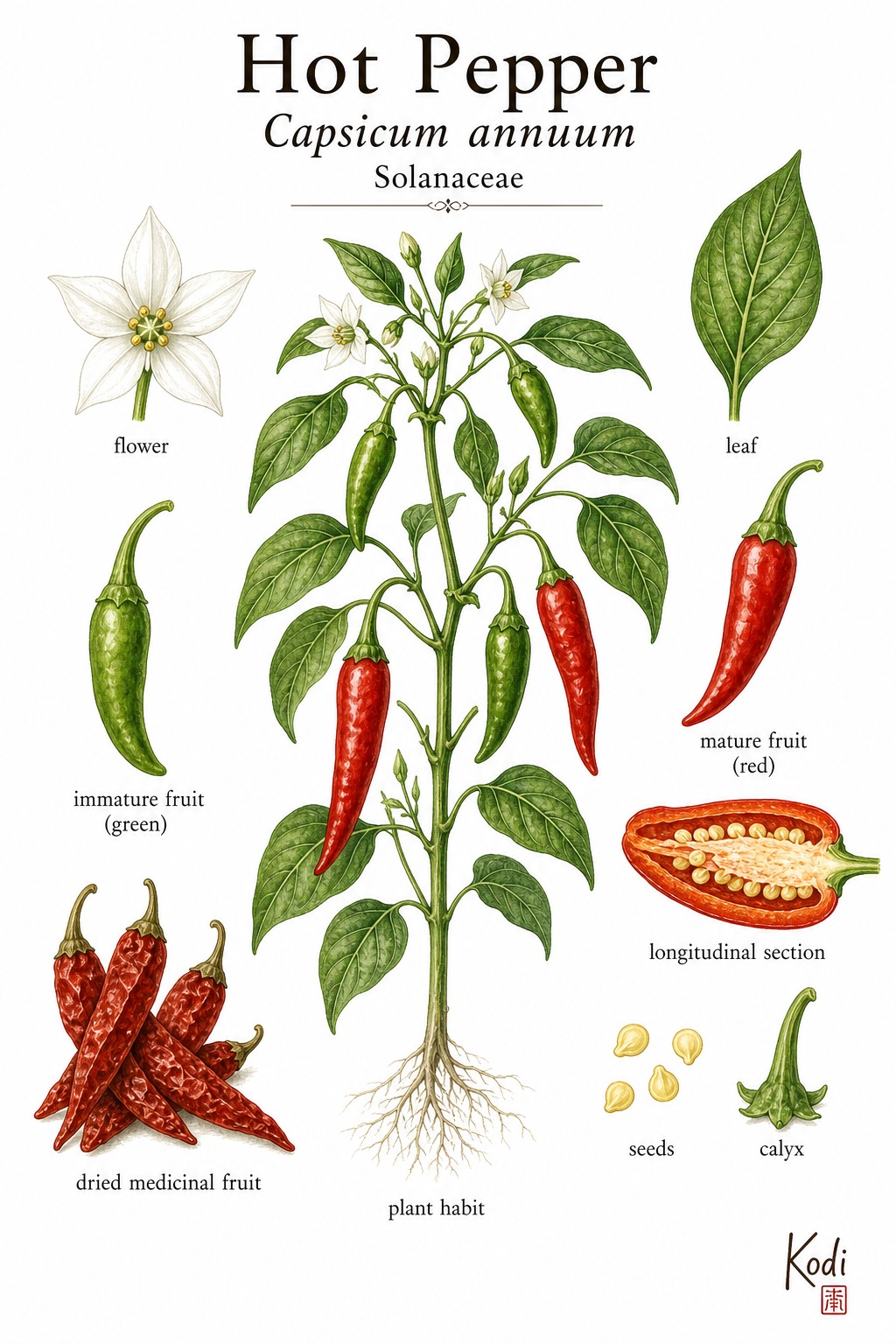
Known in TCM as La Jiao (辣椒), this acrid, hot herb enters the Spleen and Stomach. Traditionally, it warms the middle and disperses cold - La Jiao is used for cold-type abdominal pain, vomiting, diarrhea, and sluggish digestion when cold obstructs the middle burner, most often applied for abdominal pain, poor appetite, and diarrhea. Modern research has identified Capsaicin among its active constituents.
Part used: Fruit
Also Known As
Latin: Fructus Capsici | Pinyin: La Jiao | Chinese: 辣椒
TCM Properties
- Taste
- acrid
- Temperature
- hot
- Channels
- Spleen, Stomach
Traditional Use
Primary Actions
- Warms the middle and disperses cold - La Jiao is used for cold-type abdominal pain, vomiting, diarrhea, and sluggish digestion when cold obstructs the middle burner.
- Moves qi downward and promotes digestion - it helps reduce food stagnation, chest or epigastric oppression, and poor appetite when cold and damp impede digestive movement.
- Warms the channels externally - topical or wash-style use appears in folk and regional practice for rheumatic pain, chilblains, and poor local circulation.
Secondary Actions
- Medicinal use of La Jiao is narrower than its everyday culinary use. The fact that chili is common in food does not mean high-dose medicinal use is automatically gentle or appropriate for every constitution.
- Modern capsaicin pain literature often involves standardized topical extracts or high-concentration patches, which should not be confused with simply eating more chili.
Classic Formulas
- La Jiao with Sheng Jiang or Gao Liang Jiang - warming-middle pairings used when abdominal pain, vomiting, or diarrhea reflect cold rather than heat.
- Topical chili preparations or decoction washes - traditional external approach for cold-damp painful joints or frostbite-type lesions.
- Food-medicine use in warming soups or congees - a gentler strategy for cold digestion in people who tolerate pungent foods.
Classical References
- Chinese materia medica references describe La Jiao as acrid and hot, entering the Spleen and Stomach to warm the middle, scatter cold, direct qi downward, and aid digestion.
- Its standard indications center on cold stagnation and weak digestive fire, not on heat patterns.
- External use is also described for wind-damp pain and cold-injury lesions such as chilblains.
Modern Research
Active Compounds
- Capsaicin - the dominant pungent vanilloid linked to analgesic, sensory-neural, and circulatory effects
- Dihydrocapsaicin and related capsaicinoids - supporting pungent constituents with overlapping pharmacology
- Carotenoids including capsanthin - pigment compounds relevant to antioxidant discussion
- Vitamin C and polyphenolic compounds - supportive food-medicine constituents rather than unique TCM markers
Studied Effects
- A 2015 review summarized the broad pharmacology of red pepper and capsaicin, including anti-inflammatory, metabolic, antimicrobial, and sensory-neural effects, while noting that dose and preparation matter substantially (PMID 25675368).
- A 2020 review explained how capsaicin can produce analgesia through dose-dependent desensitization or defunctionalization of nociceptor fibers, supporting the modern topical pain bridge most strongly rather than crude internal use (PMID 33181192).
- A 2021 review of topical analgesics found evidence for high-concentration topical capsaicin in selected chronic pain settings, especially neuropathic and some musculoskeletal pain syndromes (PMID 33534003).
PubMed References
Safety & Interactions
Contraindications
- Yin deficiency with heat signs
- Active bleeding disorders or pronounced heat signs
- Ulcerative or markedly inflamed gastrointestinal conditions aggravated by pungent irritants
Cautions
- Large amounts can aggravate gastric irritation, reflux, hemorrhoidal burning, or oral mucosal irritation.
- Topical capsaicin can cause intense burning and should not be applied to broken skin or used carelessly with heat or occlusion.
- Modern topical capsaicin products are standardized and are not interchangeable with crude kitchen chili.
Conditions
- Abdominal Pain Traditional ★★★☆☆ JSON
- Poor Appetite Traditional ★★★☆☆ JSON
- Diarrhea Traditional ★★☆☆☆ JSON
- Joint Pain Research ★★☆☆☆ JSON
Frequently Asked Questions
What is Hot Pepper used for?
Hot Pepper is traditionally used to Warms the middle and disperses cold - La Jiao is used for cold-type abdominal pain, vomiting, diarrhea, and sluggish digestion when cold obstructs the middle burner., Moves qi downward and promotes digestion - it helps reduce food stagnation, chest or epigastric oppression, and poor appetite when cold and damp impede digestive movement., Warms the channels externally - topical or wash-style use appears in folk and regional practice for rheumatic pain, chilblains, and poor local circulation.. Research has investigated its effects on: A 2015 review summarized the broad pharmacology of red pepper and capsaicin, including anti-inflammatory, metabolic, antimicrobial, and sensory-neural effects, while noting that dose and preparation matter substantially (PMID 25675368).; A 2020 review explained how capsaicin can produce analgesia through dose-dependent desensitization or defunctionalization of nociceptor fibers, supporting the modern topical pain bridge most strongly rather than crude internal use (PMID 33181192)..
What are other names for Hot Pepper?
Hot Pepper is also known as Capsicum Fruit, Red Chili. In TCM: 辣椒 (La Jiao); Fructus Capsici.
Is Hot Pepper safe during pregnancy?
The safety of Hot Pepper during pregnancy has not been established. Consult a qualified healthcare provider before use.
What are the contraindications for Hot Pepper?
Hot Pepper should not be used in: Yin deficiency with heat signs; Active bleeding disorders or pronounced heat signs; Ulcerative or markedly inflamed gastrointestinal conditions aggravated by pungent irritants. Consult a qualified practitioner before use.