Hawthorn Seed
- Chinese
- 山楂核
- Pinyin
- Shan Zha He
- Latin
- Semen Crataegi
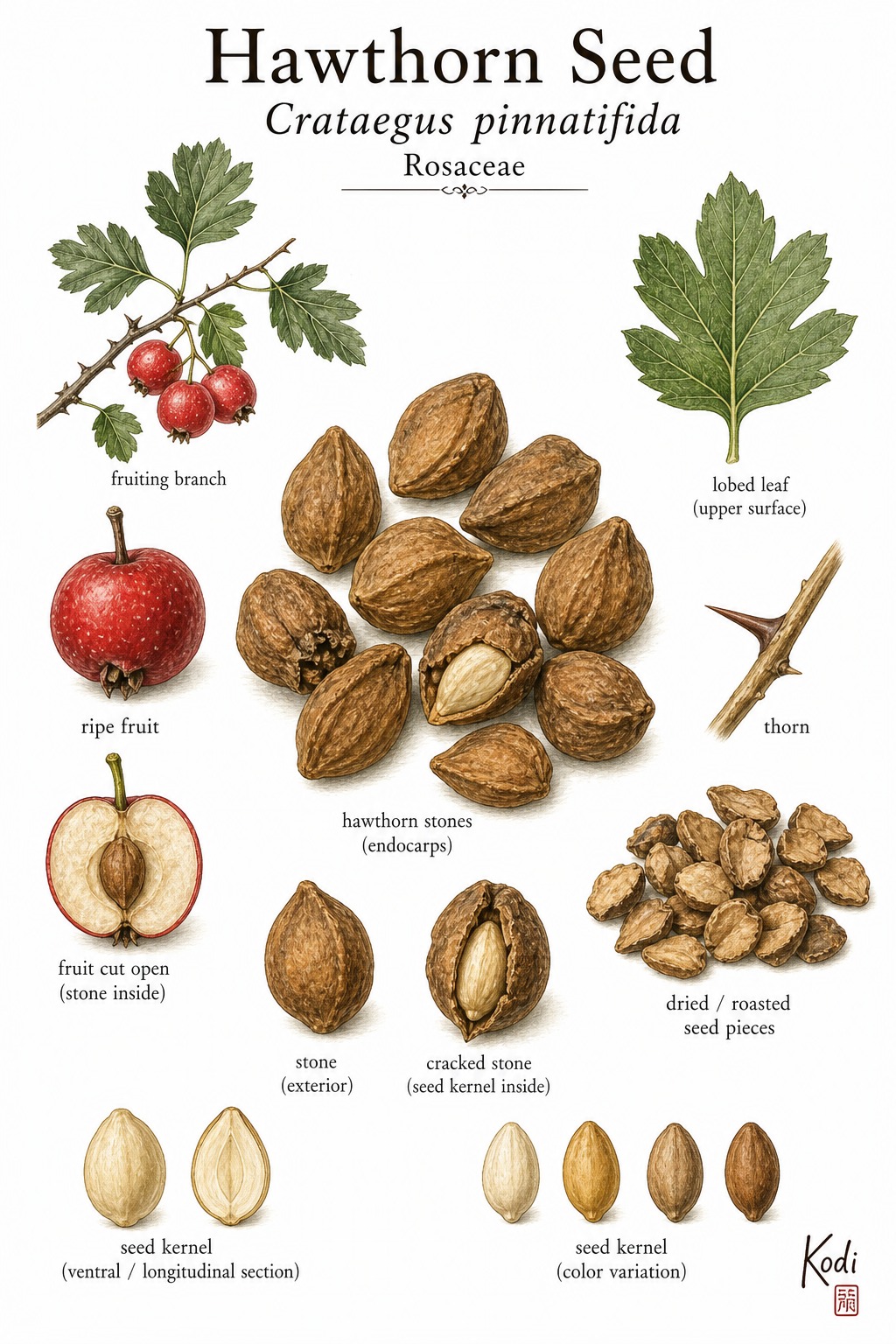
Known in TCM as Shan Zha He (山楂核), this bitter, neutral herb enters the Stomach and Liver. Traditionally, it reduces food accumulation - Shan Zha He is a narrower seed-based sibling to hawthorn fruit and is used when stubborn retained food causes sour fullness, focal pain, or a sense of digestive blockage, most often applied for indigestion, abdominal distension, and abdominal pain. Modern research has identified Ursolic among its active constituents.
Part used: Seed
Also Known As
Latin: Semen Crataegi | Pinyin: Shan Zha He | Chinese: 山楂核
TCM Properties
- Taste
- bitter
- Temperature
- neutral
- Channels
- Stomach, Liver
Traditional Use
Primary Actions
- Reduces food accumulation - Shan Zha He is a narrower seed-based sibling to hawthorn fruit and is used when stubborn retained food causes sour fullness, focal pain, or a sense of digestive blockage.
- Disperses knots and relieves hernia-type pain - classical references particularly mention scrotal or lower-abdominal distending pain grouped under old hernia terminology.
- Helps break hard accumulations - older regional usage describes powdered roasted seed for long-standing clumping or fixed digestive discomfort, though the evidence base is much thinner than for Shan Zha fruit.
Secondary Actions
- This is not the main hawthorn monograph. The fruit remains the much more common and much better documented medicinal, while the seed is a smaller historical specialty entry.
- Older texts mention childbirth-promoting use, but that does not make Shan Zha He an acceptable unsupervised obstetric remedy.
Classic Formulas
- Roasted Shan Zha He with Ji Nei Jin and Sha Ji Li - a traditional powdering strategy for persistent food accumulation with pain or sour regurgitation.
- Shan Zha He with Li Zhi He or Ju He - older pairing logic for hernia-type lower abdominal or testicular distention.
- Historical folk obstetric use appears in older records, but it is best treated as a cautionary note rather than as a modern home formula recommendation.
Classical References
- Traditional sources describe Shan Zha He as bitter and neutral, entering the Stomach and Liver to reduce food stagnation and treat hernia-type pain.
- The seed is repeatedly described as weaker and more specialized than the fruit, which helps explain its much lower modern visibility.
- Historical mention of childbirth promotion is one reason pregnancy use should be approached conservatively.
Modern Research
Active Compounds
- Ursolic acid and oleanolic acid - triterpenes reported from hawthorn seed material
- Hyperoside and quercetin-related phenolics - seed-associated flavonoid constituents described in materia medica compilations
- Linoleic and oleic acids - major fatty-acid components reported from the seed
- Phytosterols such as stigmasterol and daucosterol - supportive lipid-phase constituents
Studied Effects
- A 2013 seed-specific phytochemical study isolated several compounds from Crataegus pinnatifida seeds, but the reported bioactivity was only marginal, which fits the overall impression that modern evidence for Shan Zha He is thin (PMID 23845552).
- A broader 2014 review of Crataegus pinnatifida summarized substantial pharmacology for the species overall, but that literature is dominated by fruit and extract studies rather than direct validation of the seed monograph (PMID 24487567).
- Modern evidence therefore supports chemical plausibility more than strong seed-specific clinical application.
PubMed References
Safety & Interactions
Contraindications
- Pregnancy without qualified supervision
- Marked deficiency without food accumulation or stagnation
- Self-treatment of labor or obstructed delivery
Cautions
- Shan Zha He is a specialized historical entry and is much less studied than hawthorn fruit.
- Older obstetric references should be read as a safety caution, not as a modern home-use endorsement.
- People with significant gastric sensitivity may still find concentrated hawthorn products irritating.
Conditions
- Indigestion Traditional ★★★☆☆ JSON
- Abdominal Distension Traditional ★★☆☆☆ JSON
- Abdominal Pain Traditional ★★☆☆☆ JSON
- Poor Appetite Traditional ★☆☆☆☆ JSON
Frequently Asked Questions
What is Hawthorn Seed used for?
Hawthorn Seed is traditionally used to Reduces food accumulation - Shan Zha He is a narrower seed-based sibling to hawthorn fruit and is used when stubborn retained food causes sour fullness, focal pain, or a sense of digestive blockage., Disperses knots and relieves hernia-type pain - classical references particularly mention scrotal or lower-abdominal distending pain grouped under old hernia terminology., Helps break hard accumulations - older regional usage describes powdered roasted seed for long-standing clumping or fixed digestive discomfort, though the evidence base is much thinner than for Shan Zha fruit.. Research has investigated its effects on: A 2013 seed-specific phytochemical study isolated several compounds from Crataegus pinnatifida seeds, but the reported bioactivity was only marginal, which fits the overall impression that modern evidence for Shan Zha He is thin (PMID 23845552).; A broader 2014 review of Crataegus pinnatifida summarized substantial pharmacology for the species overall, but that literature is dominated by fruit and extract studies rather than direct validation of the seed monograph (PMID 24487567)..
What are other names for Hawthorn Seed?
Hawthorn Seed is also known as Crataegus Seed, Shan Zha Kernel. In TCM: 山楂核 (Shan Zha He); Semen Crataegi.
Is Hawthorn Seed safe during pregnancy?
The safety of Hawthorn Seed during pregnancy has not been established. Consult a qualified healthcare provider before use.
What are the contraindications for Hawthorn Seed?
Hawthorn Seed should not be used in: Pregnancy without qualified supervision; Marked deficiency without food accumulation or stagnation; Self-treatment of labor or obstructed delivery. Consult a qualified practitioner before use.