Bitterwood
- Chinese
- 苦木
- Pinyin
- Ku Mu
- Latin
- Picrasmae Ramulus Et Folium
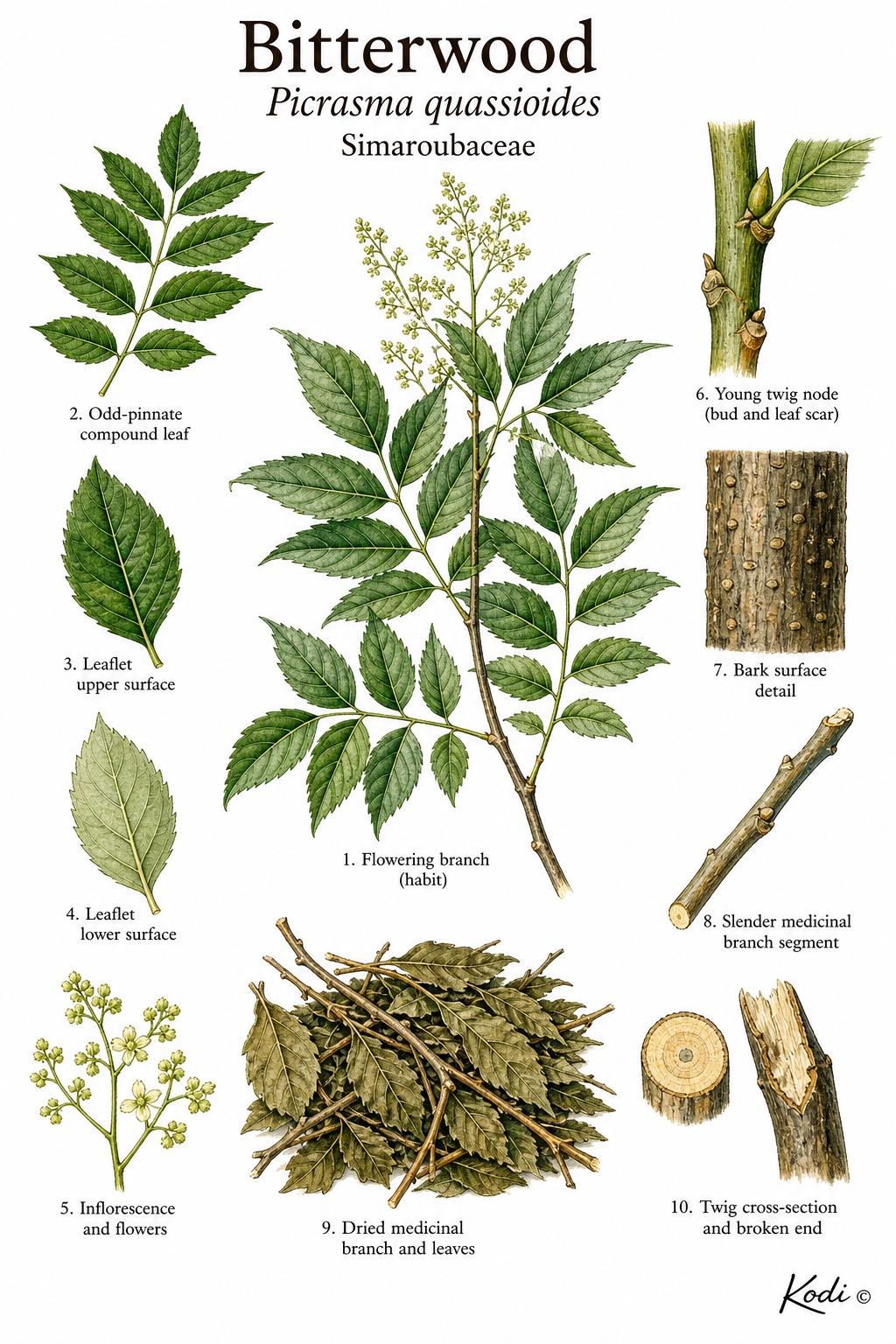
Known in TCM as Ku Mu (苦木), this bitter, cold herb enters the Lung and Large Intestine. Traditionally, it clears heat and resolves toxin - Ku Mu is used for upper-respiratory infection, pneumonia, dysentery, damp-heat sores, and other conditions in which toxic heat is prominent, most often applied for upper respiratory infection, pneumonia, and dysentery. Modern research has identified Quassinoids among its active constituents.
Part used: Twig
Also Known As
Latin: Picrasmae Ramulus Et Folium | Pinyin: Ku Mu | Chinese: 苦木
TCM Properties
- Taste
- bitter
- Temperature
- cold
- Channels
- Lung, Large Intestine
Traditional Use
Primary Actions
- Clears heat and resolves toxin - Ku Mu is used for upper-respiratory infection, pneumonia, dysentery, damp-heat sores, and other conditions in which toxic heat is prominent.
- Dries dampness and kills parasites - official and regional use includes eczema, scabies-like itching, and chronic damp skin disorders treated with washes or powders.
- Reduces swelling and helps external healing - topical application appears in folk and official practice for burns, insect bites, and even snakebite support.
Secondary Actions
- Modern official naming emphasizes branches and leaves of Picrasma quassioides, although older trade language and English glosses sometimes make it sound like a bark or wood drug. This page stays with the current medicinal-material identity rather than the misleading wood-only label.
- Ku Mu is distinctly bitter and somewhat toxic in older warnings, so it belongs to the detoxifying-bitter category rather than to the gentle bitter-tonic quassia products familiar in Western herbalism.
Classic Formulas
- Ku Mu with Shi Liu Pi or Huang Lian - dysentery-focused pairing logic for damp-heat bowel infection and abdominal pain.
- Topical powders or decoction washes with Ku Shen or Huang Bai - external damp-heat strategy for eczema, itchy skin disease, and suppurative lesions.
- Regional burn and bite applications - official modern references still preserve these external uses even though the evidence base is limited.
Classical References
- Official Chinese references describe Ku Mu as bitter and cold, entering the Lung and Large Intestine to clear heat, detoxify, dry dampness, and kill parasites.
- The listed indications include upper-respiratory infection, pneumonia, acute infectious diarrhea or dysentery, eczema, burns, and snakebite support.
- Traditional caution notes that the herb is mildly toxic and should not be treated as an everyday tonic.
Modern Research
Active Compounds
- Quassinoids - major bitter principles and pharmacology drivers in Picrasma quassioides
- Canthin-6-one alkaloids - repeatedly studied for anti-inflammatory and antimicrobial activity
- Beta-carboline alkaloids - supportive alkaloid class with neuroactive and anti-inflammatory interest
- Other phenolic and lignan constituents - additional contributors to the species research profile
Studied Effects
- A 2024 review summarized the chemistry, pharmacology, quality control, and medicinal-food potential of Picrasma quassioides, confirming continuing interest in antimicrobial, anti-inflammatory, antiparasitic, and metabolic applications (PMID 39170506).
- A 2021 bioassay-guided study identified antimicrobial compounds from Chinese medicinal Kumu, supporting the herb's traditional toxic-heat and infectious-dysentery reputation while remaining preclinical (PMID 34776978).
- A 2013 study found that canthin-6-one from Picrasma quassioides attenuated inflammatory responses through the MAPK pathway in macrophages, strengthening the anti-inflammatory bridge for Ku Mu's bitter-cold profile (PMID 23271002).
PubMed References
- Picrasma quassioides (D.Don) Benn.: A review of its medicinal food chemistry, pharmacology, quality control and medicinal food potential. (2024)
- Bioassay-Guided Isolation of Antimicrobial Compounds from Kumu, a Chinese Medicinal Herb. (2021)
- Canthin-6-one attenuates inflammatory responses in lipopolysaccharide-stimulated RAW264.7 macrophages through the MAPK pathway. (2013)
Safety & Interactions
Contraindications
- Pregnancy
- Cold-deficiency digestive weakness without heat or toxin
- Unsuitable self-treatment of serious infection or snakebite
Cautions
- Official references describe Ku Mu as mildly toxic, so excessive or casual internal use is inappropriate.
- Most modern evidence is preclinical and should not substitute for standard care in pneumonia, severe dysentery, or venomous bites.
- Because this herb is strongly bitter and cold, it can aggravate weakness or loose stool when heat is not actually present.
Conditions
Frequently Asked Questions
What is Bitterwood used for?
Bitterwood is traditionally used to Clears heat and resolves toxin - Ku Mu is used for upper-respiratory infection, pneumonia, dysentery, damp-heat sores, and other conditions in which toxic heat is prominent., Dries dampness and kills parasites - official and regional use includes eczema, scabies-like itching, and chronic damp skin disorders treated with washes or powders., Reduces swelling and helps external healing - topical application appears in folk and official practice for burns, insect bites, and even snakebite support.. Research has investigated its effects on: A 2024 review summarized the chemistry, pharmacology, quality control, and medicinal-food potential of Picrasma quassioides, confirming continuing interest in antimicrobial, anti-inflammatory, antiparasitic, and metabolic applications (PMID 39170506).; A 2021 bioassay-guided study identified antimicrobial compounds from Chinese medicinal Kumu, supporting the herb's traditional toxic-heat and infectious-dysentery reputation while remaining preclinical (PMID 34776978)..
What are other names for Bitterwood?
Bitterwood is also known as Picrasma Branch and Leaf, Quassiawood. In TCM: 苦木 (Ku Mu); Picrasmae Ramulus Et Folium.
Is Bitterwood safe during pregnancy?
The safety of Bitterwood during pregnancy has not been established. Consult a qualified healthcare provider before use.
What are the contraindications for Bitterwood?
Bitterwood should not be used in: Pregnancy; Cold-deficiency digestive weakness without heat or toxin; Unsuitable self-treatment of serious infection or snakebite. Consult a qualified practitioner before use.