Chinese Insect Wax
- Chinese
- 虫白蜡
- Pinyin
- Chong Bai La
- Latin
- Cera Chinensis
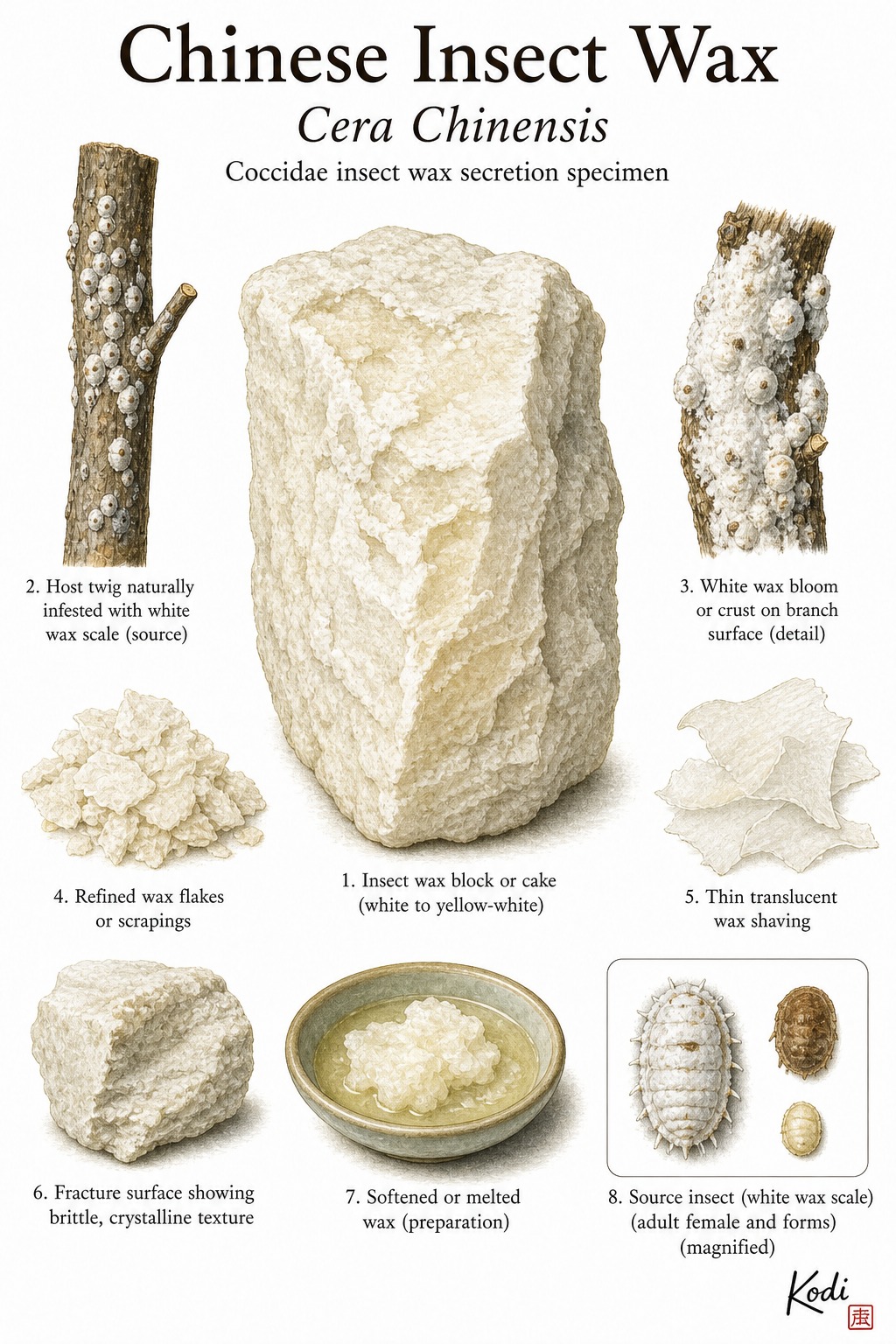
Known in TCM as Chong Bai La (虫白蜡), this sweet and bland, warm herb enters the Liver. Traditionally, it stops bleeding - Chong Bai La is used for blood in the urine or stool and for minor bleeding patterns where a mild astringing waxy substance is considered helpful, most often applied for hematuria, skin burns, and furunculosis. Modern research has identified Long-chain among its active constituents.
Part used: Wax
Also Known As
Latin: Cera Chinensis | Pinyin: Chong Bai La | Chinese: 虫白蜡
TCM Properties
- Taste
- sweet, bland
- Temperature
- warm
- Channels
- Liver
Traditional Use
Primary Actions
- Stops bleeding - Chong Bai La is used for blood in the urine or stool and for minor bleeding patterns where a mild astringing waxy substance is considered helpful.
- Promotes tissue repair and closes sores - traditional external use includes burns, fissures, and ulcers that heal slowly or need a protective membrane.
- Relieves pain and protects damaged surfaces - older pharmacy use includes ointments and powders that coat or protect irritated tissue.
Secondary Actions
- This is not beeswax. Chinese insect wax is an insect-derived secretion with a different traditional role, composition, and historical production system.
- Its modern medicinal role is relatively narrow and is often external or excipient-like, which means the traditional record is clearer than the indexed disease-specific evidence base.
Classic Formulas
- Bai La Gao - classic ointment-style usage for burns, fissures, and difficult external healing.
- Hu Mo San - membrane-protecting powder logic when damaged tissue needs covering and mild bleeding control.
- San Bai Gao - another traditional external-use format in which white wax helps hold and protect the medicated surface.
Classical References
- Official Chinese references describe Chong Bai La as sweet, bland, and warm, entering the Liver to stop bleeding, generate flesh, relieve pain, and aid wound healing.
- The standard indications include blood in the urine or stool and external lesions such as burns or ulcers.
- Its external and pharmacy-support role is more important than any notion of it as a general internal tonic.
Modern Research
Active Compounds
- Long-chain wax esters - the dominant structural constituents of Chinese insect wax
- Policosanol precursors and long-chain fatty alcohols - major modern industrial and biologic interest fraction
- Long-chain fatty acids - supportive constituents in wax chemistry
- Minor hydrocarbon and ester components - relevant to source authentication and material properties
Studied Effects
- A 2018 study developed a high-yield fabrication process for policosanol from insect wax and reported low acute oral toxicity in mice, illustrating how modern work often focuses on material chemistry rather than classical wound-healing indications (PMID 29763430).
- A 2012 transcriptome study of the Chinese white wax scale expanded understanding of wax biosynthesis, underscoring that much of the modern literature is source-organism or production focused rather than clinical (PMID 22536429).
- A 2021 experimental paper reported anti-androgenetic-alopecia effects of policosanol prepared from insect wax, which shows biologic interest in derived fractions but still does not directly validate the classical hemostatic and healing uses of crude Chong Bai La (PMID 33485069).
PubMed References
- High-yield fabrication, characterization, and acute oral toxicity of policosanol from insect wax. (2018)
- The transcriptome of the Chinese white wax scale insect Ericerus pela with focus on genes involved in wax biosynthesis. (2012)
- Anti-androgenetic alopecia effect of policosanol prepared from insect wax. (2021)
Safety & Interactions
Contraindications
- Internal use without qualified guidance when the material source is uncertain
Cautions
- Most modern research on Chinese insect wax studies derived industrial fractions rather than direct internal use of the classical crude medicinal.
- Source authentication matters because this material is not interchangeable with beeswax or generic cosmetic wax ingredients.
- Serious gastrointestinal bleeding or urinary bleeding should not be self-treated with a traditional wax material.
Conditions
- Hematuria Traditional ★★☆☆☆ JSON
- Skin Burns Traditional ★★☆☆☆ JSON
- Furunculosis Traditional ★☆☆☆☆ JSON
Frequently Asked Questions
What is Chinese Insect Wax used for?
Chinese Insect Wax is traditionally used to Stops bleeding - Chong Bai La is used for blood in the urine or stool and for minor bleeding patterns where a mild astringing waxy substance is considered helpful., Promotes tissue repair and closes sores - traditional external use includes burns, fissures, and ulcers that heal slowly or need a protective membrane., Relieves pain and protects damaged surfaces - older pharmacy use includes ointments and powders that coat or protect irritated tissue.. Research has investigated its effects on: A 2018 study developed a high-yield fabrication process for policosanol from insect wax and reported low acute oral toxicity in mice, illustrating how modern work often focuses on material chemistry rather than classical wound-healing indications (PMID 29763430).; A 2012 transcriptome study of the Chinese white wax scale expanded understanding of wax biosynthesis, underscoring that much of the modern literature is source-organism or production focused rather than clinical (PMID 22536429)..
What are other names for Chinese Insect Wax?
Chinese Insect Wax is also known as Chinese Wax, White Insect Wax. In TCM: 虫白蜡 (Chong Bai La); Cera Chinensis.
Is Chinese Insect Wax safe during pregnancy?
The safety of Chinese Insect Wax during pregnancy has not been established. Consult a qualified healthcare provider before use.
What are the contraindications for Chinese Insect Wax?
Chinese Insect Wax should not be used in: Internal use without qualified guidance when the material source is uncertain. Consult a qualified practitioner before use.