Jack Bean
- Chinese
- 刀豆
- Pinyin
- Dao Dou
- Latin
- Semen Canavaliae
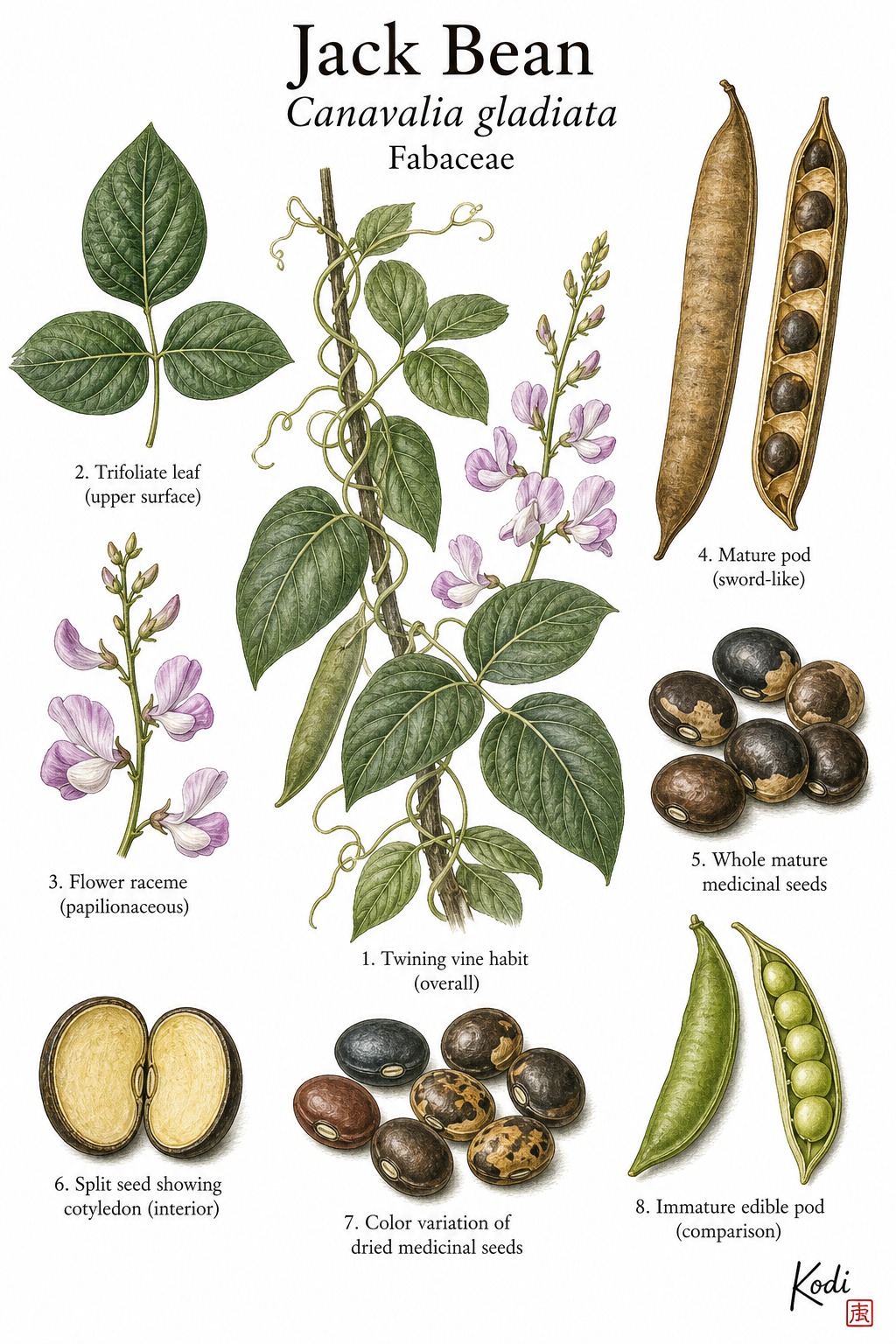
Known in TCM as Dao Dou (刀豆), this sweet, warm herb enters the Stomach and Kidney. Traditionally, it warms the middle and directs qi downward - Dao Dou is classically used for hiccup, nausea, belching, and weak cold digestion with counterflow, most often applied for nausea, dyspepsia, and hypochondriac pain. Modern research has identified Canavanine among its active constituents.
Part used: Seed
Also Known As
Latin: Semen Canavaliae | Pinyin: Dao Dou | Chinese: 刀豆
TCM Properties
- Taste
- sweet
- Temperature
- warm
- Channels
- Stomach, Kidney
Traditional Use
Primary Actions
- Warms the middle and directs qi downward - Dao Dou is classically used for hiccup, nausea, belching, and weak cold digestion with counterflow.
- Supports Kidney yang and lower-back weakness - traditional use extends beyond digestion to low-back discomfort and constitutional weakness with coldness.
- Helps regulate qi and relieve pain - official pharmacopoeial descriptions include stomach-cold distention and constrained pain patterns.
Secondary Actions
- Dao Dou is a true food-medicine bean: the immature pod is edible as a vegetable, while the mature seed is the medicinal entry here.
- Because the plant is rich in lectins and canavanine-related compounds, proper processing matters and the medicinal seed should not be romanticized as a harmless snack.
Classic Formulas
- Dao Dou powder or decoction for hiccup - classic folk and materia medica use when middle-cold causes stubborn upward qi.
- Dao Dou with Sha Ren or Sheng Jiang - warming-middle strategy for nausea, poor digestion, and weak descent.
- Kidney-warming combinations with Du Zhong or Xu Duan - traditional logic when low-back weakness accompanies cold middle-burner patterns.
Classical References
- Pharmacopoeial and reference sources describe Dao Dou as sweet and warm, entering the Stomach and Kidney to regulate qi, warm the middle, and assist yang.
- The standard indications include stomach-cold distention, hiccup, vomiting, and lower-back weakness.
- Later summaries also preserve chronic dysentery, amenorrhea, and throat complaints among its broader ethnomedical uses, though those are less central than the descending-qi role.
Modern Research
Active Compounds
- Canavanine and related non-protein amino acids - major toxicology-relevant constituents in Canavalia seeds
- Lectins such as concanavalin-type proteins - important bioactive and processing-sensitive seed proteins
- Flavonoids, terpenes, and steroidal compounds - broader phytochemical classes identified in the species
- Storage proteins such as canavalin - major nutritional and structural seed constituents
Studied Effects
- A 2025 review synthesized the ethnobotanical use, phytochemistry, pharmacology, and toxicity of Canavalia gladiata and emphasized both the plant's broad medicinal history and the important toxicity issues of immature seeds (PMID 40371003).
- A 2020 study isolated a new caryophyllene-type sesquiterpene and other compounds from sword bean, expanding the chemistry base for Dao Dou and supporting ongoing pharmacologic interest (PMID 32999741).
- A 2012 animal-feed study comparing raw and processed Canavalia gladiata seed meal showed that processing materially affects tolerance and safety, which is highly relevant to Dao Dou's food-medicine identity (PMID 23076820).
PubMed References
- Ethnobotanical Use, Phytochemistry, Pharmacology, and Toxicity of Canavalia gladiata. (2025)
- New caryophyllene-type sesquiterpene and flavonol tetraglycoside with sixteen known compounds from sword bean (Canavalia gladiata). (2020)
- Evaluation of growth performance, serum biochemistry and haematological parameters on broiler birds fed with raw and processed samples of Entada scandens, Canavalia gladiata and Canavalia ensiformis seed meal as an alternative protein source. (2012)
Safety & Interactions
Contraindications
- Stomach heat without cold or deficiency
- Use of raw or underprocessed seeds
- Pregnancy without qualified supervision when strong descending or regulating use is intended
Cautions
- Raw or undercooked sword-bean seeds can cause gastrointestinal toxicity and should not be treated as harmless.
- Medicinal use should be distinguished from ordinary culinary use of the immature pod.
- Most modern pharmacology is preclinical or species-level rather than direct human proof for classical hiccup and nausea indications.
Conditions
- Nausea Traditional ★★★☆☆ JSON
- Dyspepsia Traditional ★★★☆☆ JSON
- Hypochondriac Pain Traditional ★★☆☆☆ JSON
- Amenorrhea Traditional ★☆☆☆☆ JSON
Frequently Asked Questions
What is Jack Bean used for?
Jack Bean is traditionally used to Warms the middle and directs qi downward - Dao Dou is classically used for hiccup, nausea, belching, and weak cold digestion with counterflow., Supports Kidney yang and lower-back weakness - traditional use extends beyond digestion to low-back discomfort and constitutional weakness with coldness., Helps regulate qi and relieve pain - official pharmacopoeial descriptions include stomach-cold distention and constrained pain patterns.. Research has investigated its effects on: A 2025 review synthesized the ethnobotanical use, phytochemistry, pharmacology, and toxicity of Canavalia gladiata and emphasized both the plant's broad medicinal history and the important toxicity issues of immature seeds (PMID 40371003).; A 2020 study isolated a new caryophyllene-type sesquiterpene and other compounds from sword bean, expanding the chemistry base for Dao Dou and supporting ongoing pharmacologic interest (PMID 32999741)..
What are other names for Jack Bean?
Jack Bean is also known as Sword Bean Seed, Canavalia Seed. In TCM: 刀豆 (Dao Dou); Semen Canavaliae.
Is Jack Bean safe during pregnancy?
The safety of Jack Bean during pregnancy has not been established. Consult a qualified healthcare provider before use.
What are the contraindications for Jack Bean?
Jack Bean should not be used in: Stomach heat without cold or deficiency; Use of raw or underprocessed seeds; Pregnancy without qualified supervision when strong descending or regulating use is intended. Consult a qualified practitioner before use.