Java Brucea Fruit
- Chinese
- 鸦胆子
- Pinyin
- Ya Dan Zi
- Latin
- Fructus Bruceae
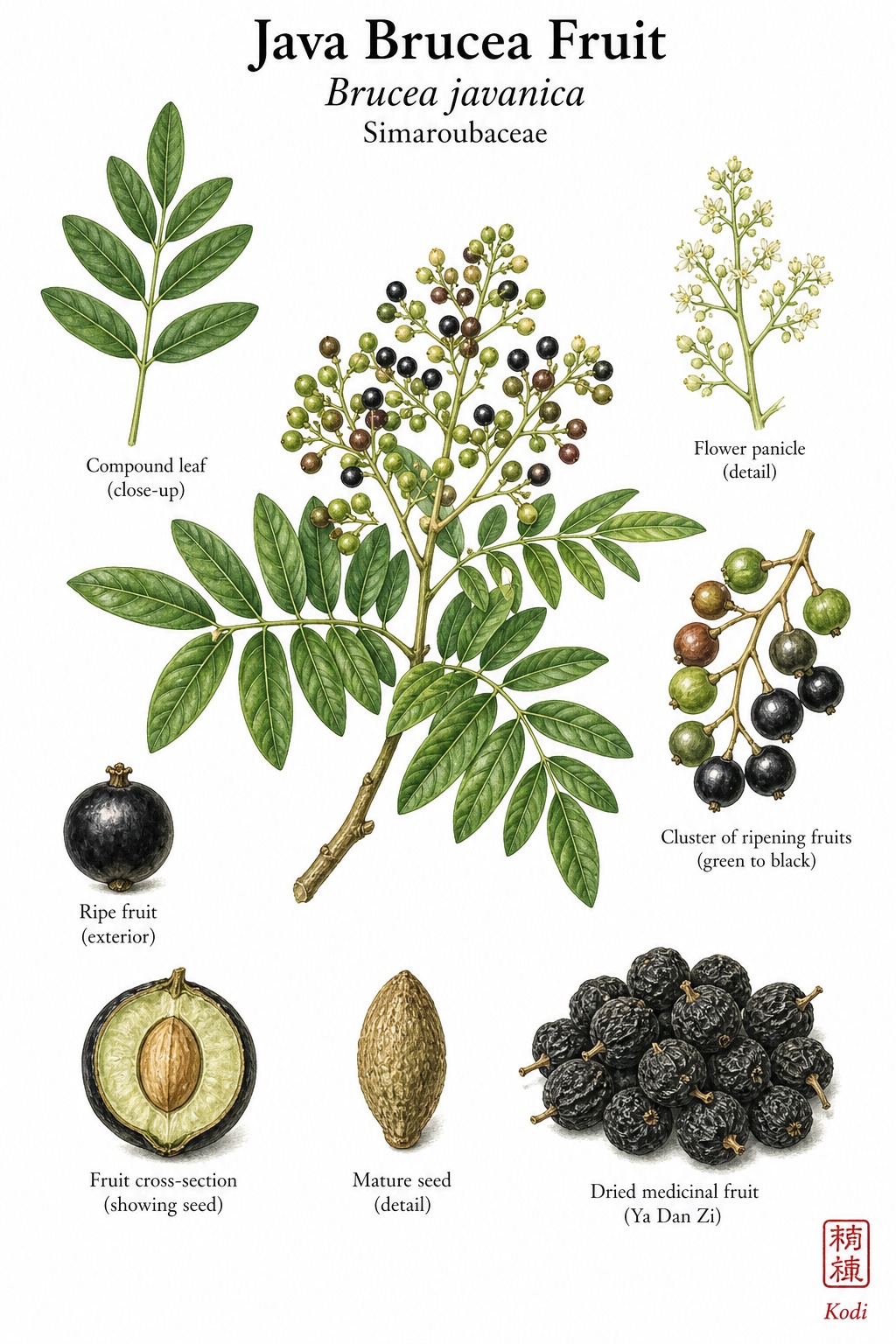
Known in TCM as Ya Dan Zi (鸦胆子), this bitter, cold herb enters the Large Intestine and Liver. Traditionally, it clears heat and resolves toxicity in refractory dysenteric disorders - Ya Dan Zi is classically used especially for amoebic or chronic dysentery with blood, tenesmus, and persistent intestinal heat-toxin, most often applied for dysentery and malaria. Modern research has identified Quassinoids among its active constituents.
Part used: Fruit
Also Known As
Latin: Fructus Bruceae | Pinyin: Ya Dan Zi | Chinese: 鸦胆子
TCM Properties
- Taste
- bitter
- Temperature
- cold
- Channels
- Large Intestine, Liver
Traditional Use
Primary Actions
- Clears heat and resolves toxicity in refractory dysenteric disorders - Ya Dan Zi is classically used especially for amoebic or chronic dysentery with blood, tenesmus, and persistent intestinal heat-toxin.
- Checks malaria - it is a strong bitter-toxic medicinal for intermittent malarial patterns and recurrent chills and fever.
- Erodes corns, warts, and other excrescences topically - external use relies on its localized destructive action rather than on gentle tissue healing.
Secondary Actions
- Ya Dan Zi is often defatted or wrapped in longan flesh or capsules because the crude fruit is intensely bitter and irritating to the gut.
- Modern Brucea javanica oncology products are mostly oil preparations or injected emulsions; those should not be treated as interchangeable with the traditional crude fruit.
Classic Formulas
- Ya Dan Zi wrapped in Long Yan Rou - classic administration method for dysentery to make the bitter fruit easier to take.
- Defatted Ya Dan Zi powder or capsules - traditional dispensing approach for intestinal heat-toxin and malaria.
- Topical Ya Dan Zi paste or seed application - external method for corns, warts, and other stubborn excrescences while protecting surrounding skin.
Classical References
- TCM Wiki describes Ya Dan Zi as bitter, cold, and toxic, entering the Large Intestine and Liver to clear heat, remove toxicity, check malaria, and erode excrescences.
- Traditional cautions emphasize harm to the gastrointestinal tract, liver, and kidney with careless or prolonged use.
- The usual clinical emphasis is on dysentery and malaria, while external use preserves its corrosive action for hard superficial growths.
Modern Research
Active Compounds
- Quassinoids such as brusatol and bruceine D - hallmark bitter tetracyclic triterpenes linked to most modern pharmacology discussions
- Bruceosides and related glycosides - supporting constituents in fruit chemistry
- Brucea javanica oil fatty acids - clinically important constituents in modern oil-emulsion cancer products
- Alkaloids, triterpenes, and flavonoids - broader secondary-metabolite classes described across the species
Studied Effects
- A 2022 review summarized major Brucea javanica constituents and noted continuing evidence for anti-inflammatory, antimalarial, antidiarrheal, and anticancer activity, though most work remains preclinical or product-specific (PMID 35370639).
- A 2013 review likewise emphasized quassinoids as the dominant modern pharmacology theme and highlighted the gap between traditional crude-fruit use and formulation-driven cancer research (PMID 23319860).
- A 2022 phytochemical study isolated a new C22 quassinoid plus fifteen known quassinoids from Brucea javanica seeds, reinforcing how chemically active and potentially harsh the medicinal material is (PMID 35514039).
PubMed References
Safety & Interactions
Contraindications
- Pregnancy
- Gastrointestinal bleeding or active ulcer irritation
- Significant liver or kidney impairment
Cautions
- Ya Dan Zi can irritate the gastrointestinal tract and is not meant for long-term unsupervised use.
- External application can damage healthy skin, so surrounding tissue should be protected before topical use.
- Brucea javanica oil emulsions used in oncology research are not dose-equivalent to the traditional crude fruit or seed.
Conditions
Frequently Asked Questions
What is Java Brucea Fruit used for?
Java Brucea Fruit is traditionally used to Clears heat and resolves toxicity in refractory dysenteric disorders - Ya Dan Zi is classically used especially for amoebic or chronic dysentery with blood, tenesmus, and persistent intestinal heat-toxin., Checks malaria - it is a strong bitter-toxic medicinal for intermittent malarial patterns and recurrent chills and fever., Erodes corns, warts, and other excrescences topically - external use relies on its localized destructive action rather than on gentle tissue healing.. Research has investigated its effects on: A 2022 review summarized major Brucea javanica constituents and noted continuing evidence for anti-inflammatory, antimalarial, antidiarrheal, and anticancer activity, though most work remains preclinical or product-specific (PMID 35370639).; A 2013 review likewise emphasized quassinoids as the dominant modern pharmacology theme and highlighted the gap between traditional crude-fruit use and formulation-driven cancer research (PMID 23319860)..
What are other names for Java Brucea Fruit?
Java Brucea Fruit is also known as Brucea Fruit, Ya Dan Zi, Brucea. In TCM: 鸦胆子 (Ya Dan Zi); Fructus Bruceae.
Is Java Brucea Fruit safe during pregnancy?
The safety of Java Brucea Fruit during pregnancy has not been established. Consult a qualified healthcare provider before use.
What are the contraindications for Java Brucea Fruit?
Java Brucea Fruit should not be used in: Pregnancy; Gastrointestinal bleeding or active ulcer irritation; Significant liver or kidney impairment. Consult a qualified practitioner before use.