Leaf of Eucalyptus
- Chinese
- 桉叶
- Pinyin
- An Ye
- Latin
- Folium Eucalypti
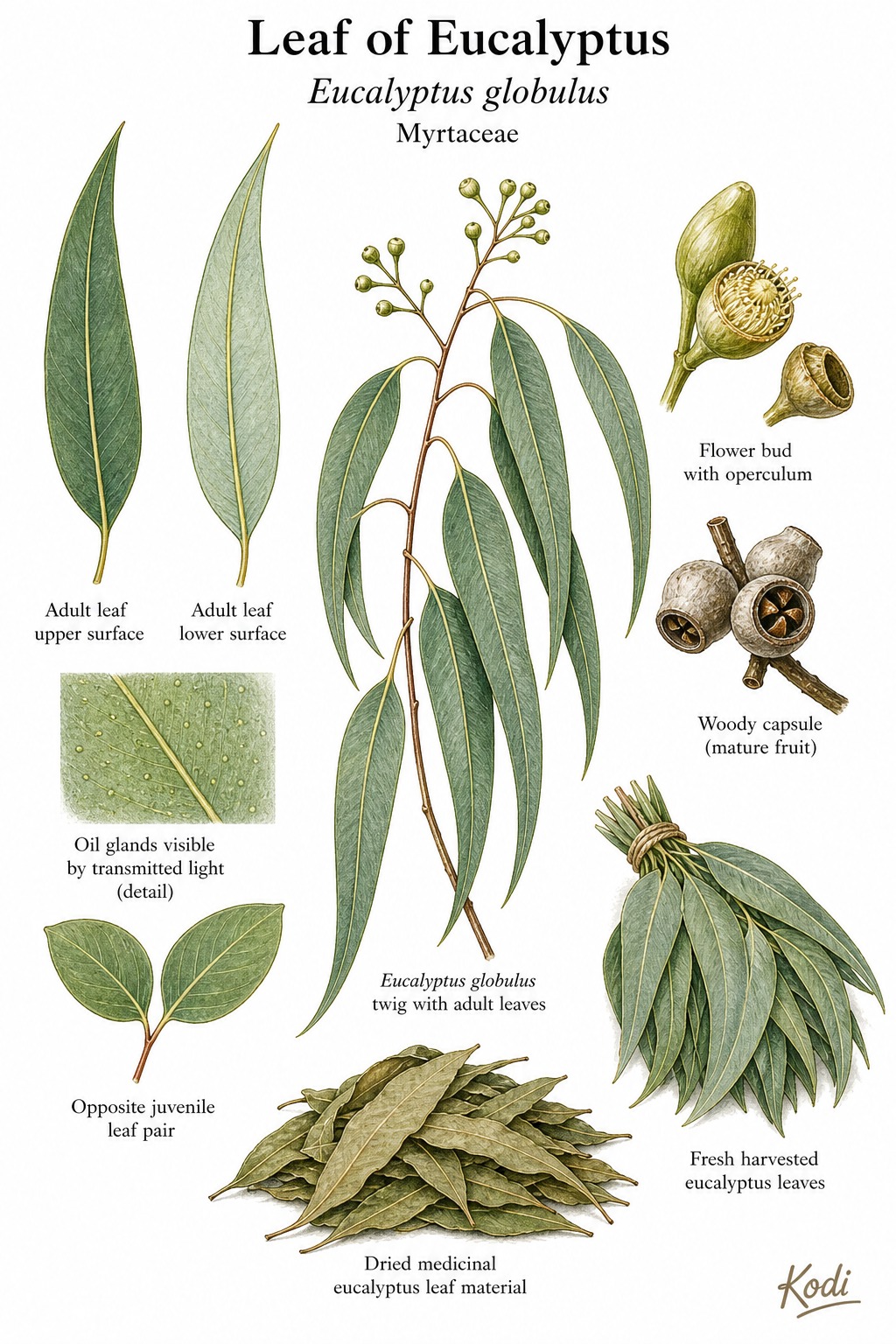
Known in TCM as An Ye (桉叶), this bitter and acrid, cold herb enters the Lung, Spleen, Stomach, and Liver. Traditionally, it dispels wind and releases the exterior - An Ye is used for common cold, fever, and exterior-type respiratory discomfort when heat and dampness coexist, most often applied for common cold, cough, and eczema. Modern research has identified 1,8-cineole among its active constituents.
Part used: Leaf
Also Known As
Latin: Folium Eucalypti | Pinyin: An Ye | Chinese: 桉叶
TCM Properties
- Taste
- bitter, acrid
- Temperature
- cold
- Channels
- Lung, Spleen, Stomach, Liver
Traditional Use
Primary Actions
- Dispels wind and releases the exterior - An Ye is used for common cold, fever, and exterior-type respiratory discomfort when heat and dampness coexist.
- Clears heat, resolves phlegm, and regulates qi - traditional use includes cough, wheezing, chest oppression, and phlegm-heat respiratory patterns.
- Removes toxicity, kills parasites, and relieves itching - external use extends to eczema, scabies, burns, and damp-toxic skin lesions.
Secondary Actions
- This is a comparatively modern imported-materia-medica record rather than a deep classical Han-dynasty staple, so its TCM profile is more regional and practical than formula-canonical.
- The decoction herb should not be confused with concentrated eucalyptus essential oil products, which are much stronger and carry different safety concerns.
Classic Formulas
- An Ye with Pi Pa Ye or Sang Bai Pi - a respiratory-clearing pairing style for cough, wheeze, and phlegm-heat.
- An Ye washes or powders - external practice for eczema, scabies, sores, or minor burns.
- An Ye with Huo Xiang or Pei Lan - damp-turbidity and summer-heat pattern logic when digestive and exterior symptoms overlap.
Classical References
- Modern TCM references describe An Ye as bitter, acrid, and cold, entering the Lung, Spleen, Stomach, and Liver to release the exterior, clear heat, resolve phlegm, and relieve itching.
- Its indications remain broad because eucalyptus entered Chinese practice through regional and practical medicine rather than through one narrow classical formula lineage.
- This monograph keeps the record conservative and leaf-centered rather than importing broader aromatherapy claims.
Modern Research
Active Compounds
- 1,8-cineole and related volatile terpenes - the best known eucalyptus leaf respiratory constituents
- Monoterpene acid and gallic-acid glucose esters - newer anti-inflammatory constituents isolated from leaves
- Flavonoids and phenolic compounds - supportive antioxidant and antimicrobial fractions
Studied Effects
- A 2022 study isolated new monoterpene acid and gallic-acid glucose esters from Eucalyptus globulus leaves and found anti-inflammatory activity, reinforcing that the leaf contains more than just volatile oil (PMID 35420422).
- A 2021 animal study reported anti-inflammatory effects of Eucalyptus globulus leaf extract in carrageenan-induced inflammation, providing a modern correlate for the herb's swelling- and heat-clearing uses (PMID 34394322).
- A 2018 paper found antimicrobial activity across multiple leaf extracts of Eucalyptus globulus against bacteria and fungi, which aligns with the herb's enduring external role in infected or itchy skin conditions (PMID 30150179).
PubMed References
- New Monoterpene Acid and Gallic Acid Glucose Esters with Anti-Inflammatory Activity from Blue Gum (Eucalyptus globulus) Leaves. (2022)
- Anti-inflammatory potential of dichloromethane leaf extracts of Eucalyptus globulus (Labill) and Senna didymobotrya (Fresenius) in mice. (2021)
- Impact of different solvent extracts from leaves and fruits of Eucalyptus globulus on growth of different bacteria and fungi. (2018)
Safety & Interactions
Contraindications
- Known allergic dermatitis to eucalyptus products
- Use of concentrated eucalyptus oil internally without medical supervision
Cautions
- Leaf decoctions and washes are not equivalent to concentrated eucalyptus essential oil, which can be irritating or toxic inappropriately used.
- Because An Ye is cold and aromatic, it may be less suitable for pure deficiency-cold cough without heat, phlegm, or toxin.
- Persistent asthma, burns, or infected skin lesions still require standard medical evaluation rather than herb-only treatment.
Conditions
Frequently Asked Questions
What is Leaf of Eucalyptus used for?
Leaf of Eucalyptus is traditionally used to Dispels wind and releases the exterior - An Ye is used for common cold, fever, and exterior-type respiratory discomfort when heat and dampness coexist., Clears heat, resolves phlegm, and regulates qi - traditional use includes cough, wheezing, chest oppression, and phlegm-heat respiratory patterns., Removes toxicity, kills parasites, and relieves itching - external use extends to eczema, scabies, burns, and damp-toxic skin lesions.. Research has investigated its effects on: A 2022 study isolated new monoterpene acid and gallic-acid glucose esters from Eucalyptus globulus leaves and found anti-inflammatory activity, reinforcing that the leaf contains more than just volatile oil (PMID 35420422).; A 2021 animal study reported anti-inflammatory effects of Eucalyptus globulus leaf extract in carrageenan-induced inflammation, providing a modern correlate for the herb's swelling- and heat-clearing uses (PMID 34394322)..
What are other names for Leaf of Eucalyptus?
Leaf of Eucalyptus is also known as Eucalyptus Leaf, Eucalypti. In TCM: 桉叶 (An Ye); Folium Eucalypti.
Is Leaf of Eucalyptus safe during pregnancy?
The safety of Leaf of Eucalyptus during pregnancy has not been established. Consult a qualified healthcare provider before use.
What are the contraindications for Leaf of Eucalyptus?
Leaf of Eucalyptus should not be used in: Known allergic dermatitis to eucalyptus products; Use of concentrated eucalyptus oil internally without medical supervision. Consult a qualified practitioner before use.