Leaf of Pendulous Monkshood
- Chinese
- 铁棒锤叶
- Pinyin
- Tie Bang Chui Ye
- Latin
- Folium Aconiti Szechenyiani
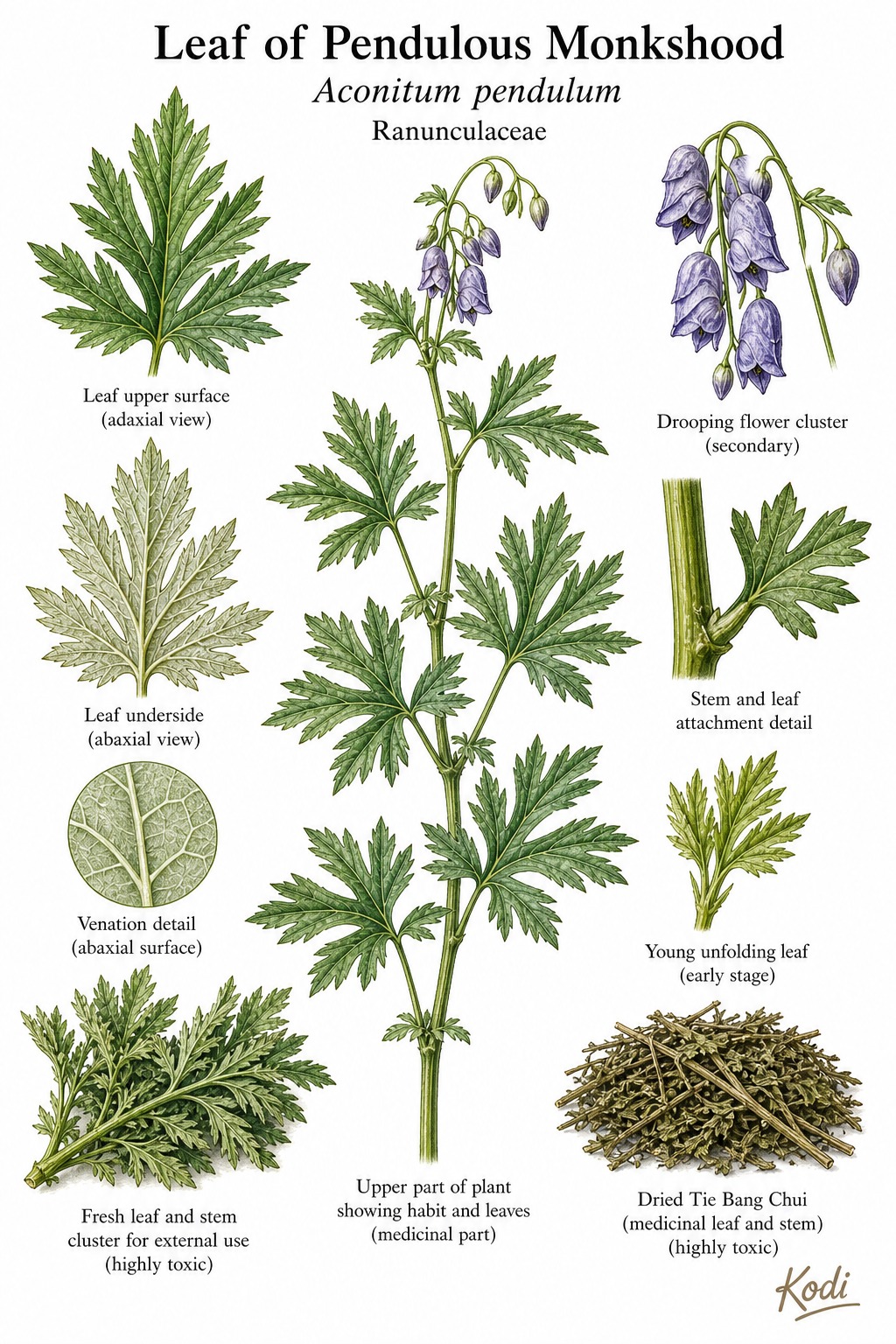
Known in TCM as Tie Bang Chui Ye (铁棒锤叶), this bitter and acrid, hot herb enters the Liver. Traditionally, it relieves pain and reduces swelling in external practice - Tie Bang Chui Ye is used for traumatic injury, painful swelling, boils, and carbuncles, most often applied for traumatic injury, abscess, and carbuncle. Modern research has identified C19-norditerpenoid among its active constituents.
Part used: Leaf
Also Known As
Latin: Folium Aconiti Szechenyiani | Pinyin: Tie Bang Chui Ye | Chinese: 铁棒锤叶
TCM Properties
- Taste
- bitter, acrid
- Temperature
- hot
- Channels
- Liver
Traditional Use
Primary Actions
- Relieves pain and reduces swelling in external practice - Tie Bang Chui Ye is used for traumatic injury, painful swelling, boils, and carbuncles.
- Disperses toxin - the leaf or stem-and-leaf material appears in regional northwestern and Tibetan-adjacent folk practice for toxic sores and inflamed lesions.
- Acts as a strong local aconite analgesic - traditional use relies on topical or highly restricted use rather than on casual internal prescribing.
Secondary Actions
- Leaf-specific literature is sparse, and many traditional references actually describe the stem-and-leaf cluster, so this page keeps the monograph intentionally narrow.
- Tie Bang Chui belongs to a different aconite lineage from Cao Wu and Fu Zi and should not be treated as an interchangeable leaf substitute for either.
Classic Formulas
- Tie Bang Chui Ye fresh poultice - traditional external use for bruising, blows, and localized injury pain.
- Tie Bang Chui stem-and-leaf washes - regional practice for boils, carbuncles, and toxic swellings.
- Tibetan and northwestern processed Tiebangchui traditions - broader species context showing that detoxification and handling are central to any medicinal use.
Classical References
- Regional Chinese herb references describe Tie Bang Chui stem and leaf as bitter, acrid, hot, and highly toxic, used mainly externally for injury and sores.
- This page preserves the leaf record as a distinct high-risk aconite entry rather than merging it into Cao Wu or generic monkshood pages.
- Because much of the older documentation concerns stem-and-leaf material together, the monograph avoids overclaiming a unique leaf-only internal tradition.
Modern Research
Active Compounds
- C19-norditerpenoid alkaloids - the main toxic and pharmacologically active constituents of Aconitum szechenyianum
- Aconitine-related alkaloids and related diterpenoid derivatives - compounds responsible for both analgesic interest and major toxicity concern
- Minor non-alkaloid lipids and other constituents - supportive chemistry not sufficient to offset alkaloid risk
Studied Effects
- A 2016 study isolated C19-norditerpenoid alkaloids from Aconitum szechenyianum and found inhibition of nitric oxide production in activated macrophages, supporting anti-inflammatory potential at the same time that it underscores the species' alkaloid-driven potency (PMID 27598121).
- A 2018 follow-up chemistry paper characterized additional C19-norditerpenoid alkaloids from Aconitum szechenyianum, reinforcing how chemically active and toxic this species remains even outside the better-known root materials (PMID 29738430).
- A 2013 comparison study found meaningful regional variation in total alkaloid and aconitine content in Aconitum szechenyianum, which supports a very conservative sourcing and safety posture for any Tie Bang Chui medicinal record (PMID 23847944).
PubMed References
- C19-Norditerpenoid Alkaloids from Aconitum szechenyianum and Their Effects on LPS-Activated NO Production. (2016)
- C19-Norditerpenoid Alkaloids from Aconitum szechenyianum. (2018)
- [Comparison of content of total alkaloids and aconitine in Aconitum szechenyianum from different producing areas on basis of macroporous adsorption resin purification technology]. (2013)
Safety & Interactions
Contraindications
- Pregnancy
- Any unsupervised internal use
- Broken-skin or large-area application without trained supervision
Cautions
- Tie Bang Chui Ye is a highly toxic aconite material, and its traditional role is mainly external and strongly restricted.
- Aconite poisoning can present with numbness, tingling, nausea, vomiting, weakness, hypotension, and life-threatening arrhythmias; suspected toxicity requires emergency care.
- Because alkaloid content varies by source and processing, casual folk harvesting or substitution is especially unsafe.
Drug Interactions
- Cardiac glycosides such as digoxin - additive arrhythmogenic risk.
- Class I and III antiarrhythmic drugs - unpredictable electrophysiologic interaction.
- QT-prolonging medications - additive risk of malignant ventricular arrhythmias.
Conditions
Frequently Asked Questions
What is Leaf of Pendulous Monkshood used for?
Leaf of Pendulous Monkshood is traditionally used to Relieves pain and reduces swelling in external practice - Tie Bang Chui Ye is used for traumatic injury, painful swelling, boils, and carbuncles., Disperses toxin - the leaf or stem-and-leaf material appears in regional northwestern and Tibetan-adjacent folk practice for toxic sores and inflamed lesions., Acts as a strong local aconite analgesic - traditional use relies on topical or highly restricted use rather than on casual internal prescribing.. Research has investigated its effects on: A 2016 study isolated C19-norditerpenoid alkaloids from Aconitum szechenyianum and found inhibition of nitric oxide production in activated macrophages, supporting anti-inflammatory potential at the same time that it underscores the species' alkaloid-driven potency (PMID 27598121).; A 2018 follow-up chemistry paper characterized additional C19-norditerpenoid alkaloids from Aconitum szechenyianum, reinforcing how chemically active and toxic this species remains even outside the better-known root materials (PMID 29738430)..
What are other names for Leaf of Pendulous Monkshood?
Leaf of Pendulous Monkshood is also known as Tie Bang Chui Jing Ye, Aconiti. In TCM: 铁棒锤叶 (Tie Bang Chui Ye); Folium Aconiti Szechenyiani.
Is Leaf of Pendulous Monkshood safe during pregnancy?
Leaf of Pendulous Monkshood is not recommended during pregnancy.
What are the contraindications for Leaf of Pendulous Monkshood?
Leaf of Pendulous Monkshood should not be used in: Pregnancy; Any unsupervised internal use; Broken-skin or large-area application without trained supervision. Consult a qualified practitioner before use.
Does Leaf of Pendulous Monkshood interact with any medications?
Leaf of Pendulous Monkshood may interact with: Cardiac glycosides such as digoxin - additive arrhythmogenic risk.; Class I and III antiarrhythmic drugs - unpredictable electrophysiologic interaction.; QT-prolonging medications - additive risk of malignant ventricular arrhythmias.. Always inform your healthcare provider of any herbal supplements you are taking.