Leaf Sheath Fibres of Fortune Windmill Palm
- Chinese
- 棕榈皮
- Pinyin
- Zong Lv Pi
- Latin
- Petiolus Trachycarpi
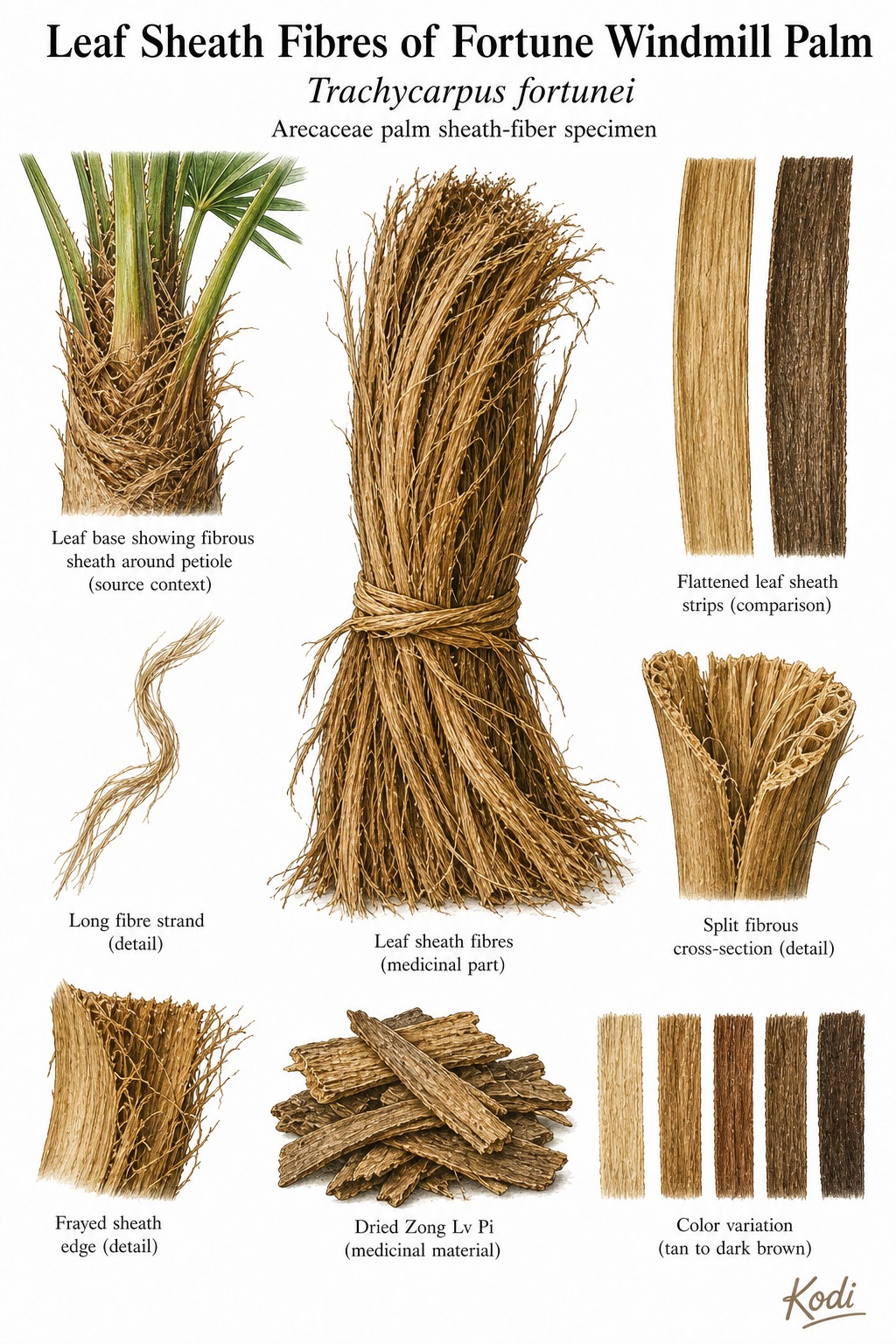
Known in TCM as Zong Lv Pi (棕榈皮), this bitter and astringent, neutral herb enters the Liver and Spleen. Traditionally, it astringes to stop bleeding - Zong Lv Pi is classically used for uterine bleeding, hematuria, hematemesis, hematochezia, and other bleeding disorders, most often applied for abnormal uterine bleeding, hematuria, and hemoptysis. Modern research has identified Tannin-rich among its active constituents.
Part used: Leaf stalk
Also Known As
Latin: Petiolus Trachycarpi | Pinyin: Zong Lv Pi | Chinese: 棕榈皮
TCM Properties
- Taste
- bitter, astringent
- Temperature
- neutral
- Channels
- Liver, Spleen
Traditional Use
Primary Actions
- Astringes to stop bleeding - Zong Lv Pi is classically used for uterine bleeding, hematuria, hematemesis, hematochezia, and other bleeding disorders.
- Supports topical hemostasis and wound care - external use includes cuts, traumatic bleeding, and localized lesions needing drying and restraint.
- Restrains leakage - older indications extend to leukorrhea and lingering intestinal or damp leakage patterns.
Secondary Actions
- The charred form `Zong Lv Tan` is usually considered stronger for hemostasis than the raw petiole fiber.
- Unlike blood-cooling herbs that also move or clear stasis, Zong Lv Pi is mainly an astringent stopping herb, so it is usually paired with other medicinals according to cause.
Classic Formulas
- Shi Hui San - classic blood-heat bleeding formula in which charred palm fiber helps arrest bleeding by astringency.
- Zong Pu San - palm-and-cattail pairing logic for uterine or lower-burner bleeding.
- Zong Lv Pi with Ce Bai Ye or Bai Mao Gen - common hemostatic combination style across different bleeding sites.
Classical References
- Traditional references describe Zong Lv Pi as bitter, astringent, and neutral, entering the Liver and Spleen to arrest bleeding.
- The medicinal material is the fibrous petiole or sheath layer of Trachycarpus fortunei rather than the seed, fruit, or ornamental palm canopy.
- This page keeps the monograph narrow because its traditional identity is more about astringent hemostasis than about broad systemic pharmacology.
Modern Research
Active Compounds
- Tannin-rich and polyphenol-containing fibrous fractions - plausible astringent contributors
- Lignocellulosic structural matrix - the dominant physical basis of the medicinal petiole fiber
- Minor related palm constituents - incompletely characterized in direct medicinal studies
Studied Effects
- Direct indexed pharmacology on medicinal Zong Lv Pi is sparse, so modern evidence should be read very cautiously.
- A 2017 study on Trachycarpus fortunei reported antibacterial compounds from the seed coat of the same plant species, offering only indirect support that windmill-palm materials can carry bioactive small molecules beyond inert fiber (PMID 29046668).
- A 2017 materials study characterized the durability and structure of windmill palm fibers, which helps confirm the distinctive fibrous medicinal part but does not by itself validate hemostatic claims (PMID 28772876).
PubMed References
Safety & Interactions
Contraindications
- Bleeding from retained stasis or severe heat when astringing alone would trap the pathology
Cautions
- Zong Lv Pi is usually an adjunctive hemostatic rather than a stand-alone answer for persistent or unexplained bleeding.
- Direct modern medicinal research is sparse, so the contemporary section relies heavily on part identity and indirect same-plant evidence.
- Persistent uterine bleeding, hematuria, or gastrointestinal bleeding requires standard diagnosis rather than prolonged self-treatment.
Conditions
- Abnormal Uterine Bleeding Traditional ★★★☆☆ JSON
- Hematuria Traditional ★★☆☆☆ JSON
- Hemoptysis Traditional ★★☆☆☆ JSON
- Leucorrhea Traditional ★★☆☆☆ JSON
Frequently Asked Questions
What is Leaf Sheath Fibres of Fortune Windmill Palm used for?
Leaf Sheath Fibres of Fortune Windmill Palm is traditionally used to Astringes to stop bleeding - Zong Lv Pi is classically used for uterine bleeding, hematuria, hematemesis, hematochezia, and other bleeding disorders., Supports topical hemostasis and wound care - external use includes cuts, traumatic bleeding, and localized lesions needing drying and restraint., Restrains leakage - older indications extend to leukorrhea and lingering intestinal or damp leakage patterns.. Research has investigated its effects on: Direct indexed pharmacology on medicinal Zong Lv Pi is sparse, so modern evidence should be read very cautiously.; A 2017 study on Trachycarpus fortunei reported antibacterial compounds from the seed coat of the same plant species, offering only indirect support that windmill-palm materials can carry bioactive small molecules beyond inert fiber (PMID 29046668)..
What are other names for Leaf Sheath Fibres of Fortune Windmill Palm?
Leaf Sheath Fibres of Fortune Windmill Palm is also known as Palm Fiber, Trachycarpi. In TCM: 棕榈皮 (Zong Lv Pi); Petiolus Trachycarpi.
Is Leaf Sheath Fibres of Fortune Windmill Palm safe during pregnancy?
The safety of Leaf Sheath Fibres of Fortune Windmill Palm during pregnancy has not been established. Consult a qualified healthcare provider before use.
What are the contraindications for Leaf Sheath Fibres of Fortune Windmill Palm?
Leaf Sheath Fibres of Fortune Windmill Palm should not be used in: Bleeding from retained stasis or severe heat when astringing alone would trap the pathology. Consult a qualified practitioner before use.