Leech
- Chinese
- 水蛭
- Pinyin
- Shui Zhi
- Latin
- Hirudo
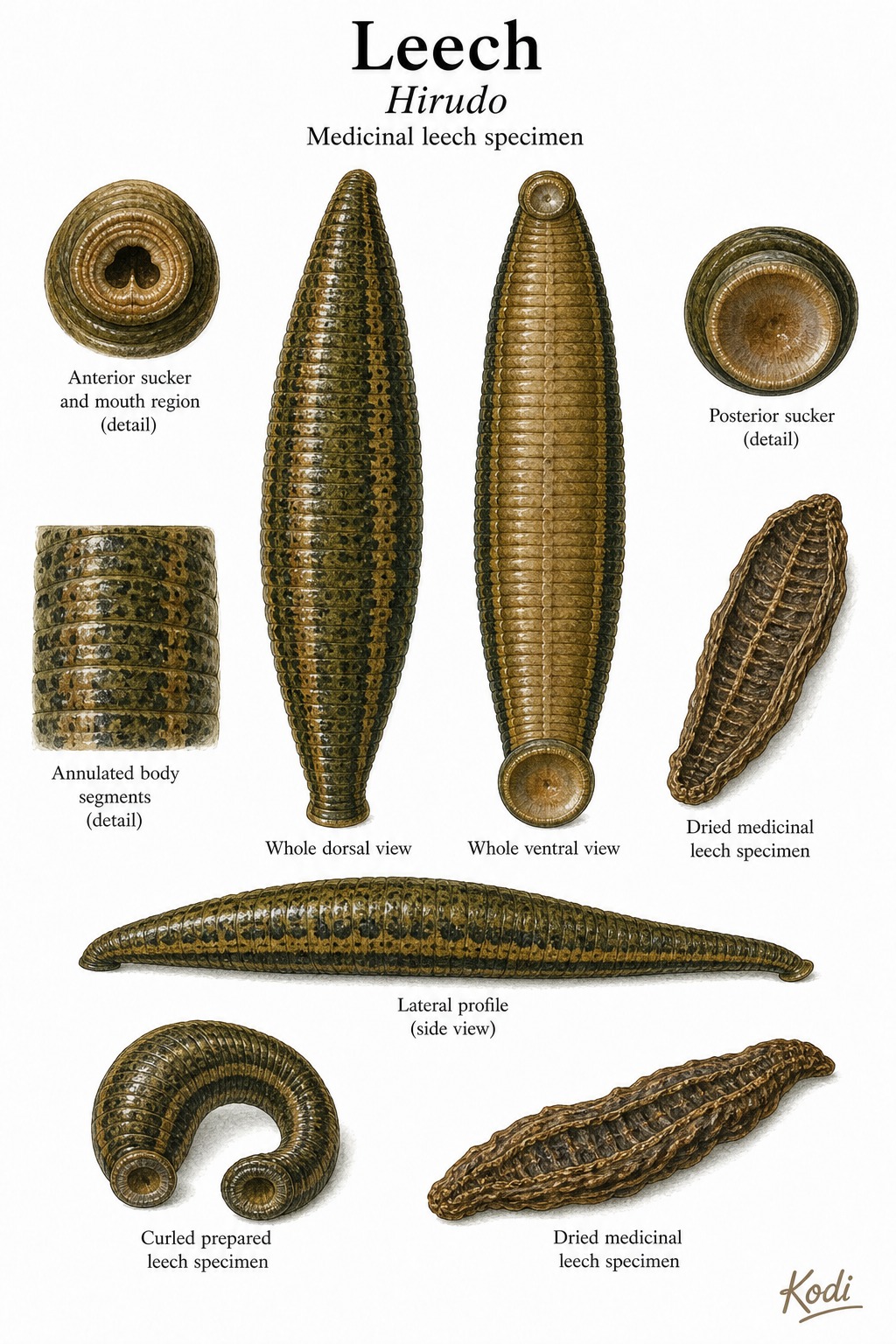
Known in TCM as Shui Zhi (水蛭), this salty and bitter, neutral herb enters the Liver. Traditionally, it breaks blood and dispels stasis - Shui Zhi is one of the strongest blood-breaking medicinals, used for fixed masses, severe stasis, and obstruction with sharp, unmoving pain, most often applied for blood stasis, amenorrhea, and traumatic injury. Modern research has identified Hirudin among its active constituents.
Also Known As
Latin: Hirudo | Pinyin: Shui Zhi | Chinese: 水蛭
TCM Properties
- Taste
- salty, bitter
- Temperature
- neutral
- Channels
- Liver
Traditional Use
Primary Actions
- Breaks blood and dispels stasis - Shui Zhi is one of the strongest blood-breaking medicinals, used for fixed masses, severe stasis, and obstruction with sharp, unmoving pain.
- Moves menstruation and resolves masses - traditional indications include amenorrhea from blood stasis and lower-abdomen accumulations.
- Treats traumatic injury - it is also used for severe bruising and injury when coagulated blood remains unresolved.
Secondary Actions
- Shui Zhi is much stronger and more attacking than ordinary blood-moving herbs such as Hong Hua or Dan Shen, so it is reserved for true excess stasis.
- Traditional processing and dosage matter because heating and acid can degrade hirudin-like activity, which is one reason powders and pills are often emphasized.
Classic Formulas
- Di Dang Tang - classic lower-abdomen blood-stasis formula using Shui Zhi with Tao Ren, Meng Chong, and Da Huang.
- Shui Zhi with Meng Chong - classic pair for strongly breaking stubborn masses and coagulated blood.
- Shui Zhi with Su Mu or Zi Ran Tong - trauma-focused pairing logic when pain and congealed blood are prominent.
Classical References
- Traditional references describe Shui Zhi as salty, bitter, neutral, and slightly toxic, entering the Liver to break blood and dispel stasis.
- This herb belongs to the hard-driving end of the blood-breaking category and should not be confused with milder circulation-supporting animal medicinals.
- The classical indication set is excess-type blood stasis, not deficiency-related poor circulation.
Modern Research
Active Compounds
- Hirudin and hirudin-like peptides - the best known antithrombin constituents associated with medicinal leech use
- Antistasin and related anticoagulant proteins - supportive antithrombotic factors in leech saliva
- Additional salivary gland proteins with antiplatelet, anti-inflammatory, and antibacterial potential
Studied Effects
- A 2018 transcriptomic analysis of the salivary gland of Hirudo nipponia identified numerous genes related to anticoagulatory, antithrombotic, antibacterial, anti-inflammatory, and antitumor processes, providing a modern molecular basis for the medicinal importance of Shui Zhi (PMID 30339694).
- A 2021 review summarized hirudin and related derivatives as potent antithrombotic substances with additional anti-fibrotic and wound-related activity, while also reinforcing the bleeding-risk profile that accompanies their use (PMID 33935784).
- A 2022 review of medicinal leech therapy for venous congestion and ischemia-reperfusion injury documented both genuine therapeutic potential and meaningful complication risks, which supports a cautious rather than casual reading of leech medicine (PMID 35514759).
PubMed References
- Transcriptomic analysis of the salivary gland of medicinal leech Hirudo nipponia. (2018)
- Pharmacological Activities and Mechanisms of Hirudin and Its Derivatives - A Review. (2021)
- Leech Therapy Protects Free Flaps against Venous Congestion, Thrombus Formation, and Ischemia/Reperfusion Injury: Benefits, Complications, and Contradictions. (2022)
Safety & Interactions
Contraindications
- Pregnancy
- Active bleeding, hemorrhagic tendency, or severe thrombocytopenia
- Concurrent anticoagulant or antiplatelet therapy without close supervision
Cautions
- Shui Zhi is a strong blood-breaking animal medicine with real anticoagulant relevance and should not be used casually in people with bleeding risk.
- Animal-derived material also raises sourcing, contamination, and identity concerns beyond those of ordinary plant herbs.
- Persistent pelvic pain, amenorrhea, or masses still require medical evaluation rather than herb-only treatment.
Drug Interactions
- Warfarin and other anticoagulants - additive bleeding risk.
- Antiplatelet drugs such as aspirin or clopidogrel - additive bleeding risk.
- Thrombolytics - increased hemorrhagic risk.
Conditions
- Blood Stasis Traditional ★★★★☆ JSON
- Amenorrhea Traditional ★★★★☆ JSON
- Traumatic Injury Traditional ★★★☆☆ JSON
- Abdominal Pain Traditional ★★☆☆☆ JSON
Frequently Asked Questions
What is Leech used for?
Leech is traditionally used to Breaks blood and dispels stasis - Shui Zhi is one of the strongest blood-breaking medicinals, used for fixed masses, severe stasis, and obstruction with sharp, unmoving pain., Moves menstruation and resolves masses - traditional indications include amenorrhea from blood stasis and lower-abdomen accumulations., Treats traumatic injury - it is also used for severe bruising and injury when coagulated blood remains unresolved.. Research has investigated its effects on: A 2018 transcriptomic analysis of the salivary gland of Hirudo nipponia identified numerous genes related to anticoagulatory, antithrombotic, antibacterial, anti-inflammatory, and antitumor processes, providing a modern molecular basis for the medicinal importance of Shui Zhi (PMID 30339694).; A 2021 review summarized hirudin and related derivatives as potent antithrombotic substances with additional anti-fibrotic and wound-related activity, while also reinforcing the bleeding-risk profile that accompanies their use (PMID 33935784)..
What are other names for Leech?
Leech is also known as Medicinal Leech, Hirudo. In TCM: 水蛭 (Shui Zhi); Hirudo.
Is Leech safe during pregnancy?
Leech is not recommended during pregnancy.
What are the contraindications for Leech?
Leech should not be used in: Pregnancy; Active bleeding, hemorrhagic tendency, or severe thrombocytopenia; Concurrent anticoagulant or antiplatelet therapy without close supervision. Consult a qualified practitioner before use.
Does Leech interact with any medications?
Leech may interact with: Warfarin and other anticoagulants - additive bleeding risk.; Antiplatelet drugs such as aspirin or clopidogrel - additive bleeding risk.; Thrombolytics - increased hemorrhagic risk.. Always inform your healthcare provider of any herbal supplements you are taking.