Flaxseed
- Chinese
- 亚麻子
- Pinyin
- Ya Ma Zi
- Latin
- Semen Lini
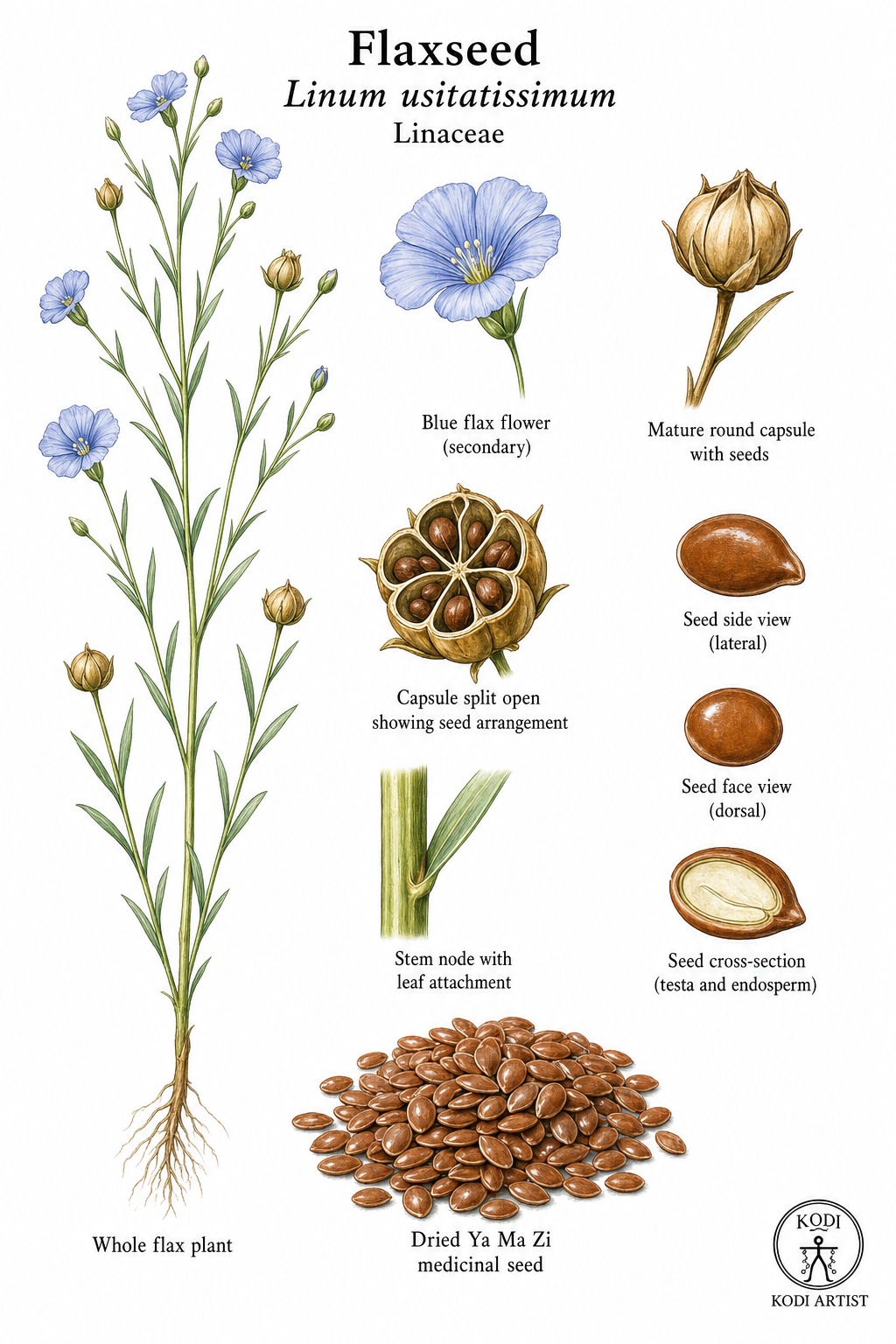
Known in TCM as Ya Ma Zi (亚麻子), this sweet, neutral herb enters the Lung, Liver, and Large Intestine. Traditionally, it moistens dryness and relaxes the bowels - Ya Ma Zi is classically used for constipation from intestinal dryness, especially when the patient is depleted or dry rather than strongly excess, most often applied for constipation, high cholesterol, and type 2 diabetes. Modern research has identified Alpha-linolenic among its active constituents.
Part used: Seed
Also Known As
Latin: Semen Lini | Pinyin: Ya Ma Zi | Chinese: 亚麻子
TCM Properties
- Taste
- sweet
- Temperature
- neutral
- Channels
- Lung, Liver, Large Intestine
Traditional Use
Primary Actions
- Moistens dryness and relaxes the bowels - Ya Ma Zi is classically used for constipation from intestinal dryness, especially when the patient is depleted or dry rather than strongly excess.
- Nourishes blood and softens wind-dry tissue - older use includes dry skin, itching, rough hair, and constitutional dryness that benefits from an oily seed rather than a harsh purgative.
- Moistens the Lung - traditional use extends to dry cough and dryness of the chest or throat when internal lubrication is weak.
Secondary Actions
- Ya Ma Zi is a food-herb bridge more than a dramatic cathartic. It works by lubrication and softening, not by forceful purgation.
- The whole seed, ground meal, oil, and concentrated supplement formats are not interchangeable in strength or modern safety framing.
Classic Formulas
- Ya Ma Zi with Huo Ma Ren and Yu Li Ren - bowel-lubricating pairing logic for dry constipation in older or depleted patients.
- Ya Ma Zi with Dang Gui or Sang Shen - traditional strategy for blood-dry intestinal constipation with dry skin and weakness.
- Ground Ya Ma Zi with oils or washes - older topical use for dry, cracked, or rough skin where emollient seed material is preferred over harsh irritants.
Classical References
- Traditional herbology describes Ya Ma Zi as sweet and neutral, entering the Lung, Liver, and Large Intestine to moisten dryness and relax the bowels.
- Older teaching also credits the seed with nourishing blood and dispelling dryness-related wind, which helps explain its skin and hair references.
- The herb is unsuitable when loose stools or weak digestion are already present because its oily moistening nature can worsen leakage.
Modern Research
Active Compounds
- Alpha-linolenic acid - the flagship omega-3 fatty acid of flaxseed
- Secoisolariciresinol diglucoside and related lignans - major phytoestrogenic and antioxidant constituents
- Soluble and insoluble fiber - the main laxation-supporting bulk and mucilage fraction
- Linoleic acid and seed-oil fractions - additional cardiometabolic constituents
Studied Effects
- A 2014 randomized controlled trial found flaxseed oil improved constipation symptoms in hemodialysis patients and compared favorably with mineral oil, supporting the seed's modern bowel-lubricating relevance (PMID 25238699).
- A 2015 meta-analysis concluded that flaxseed consumption may lower blood pressure modestly, especially with whole-seed use over longer durations (PMID 25740909).
- A 2023 systematic review and meta-analysis found flaxseed supplementation significantly reduced hemoglobin A1c in patients with type 2 diabetes, although many other metabolic findings remained mixed (PMID 36640581).
PubMed References
- The short-term effects of olive oil and flaxseed oil for the treatment of constipation in hemodialysis patients (2014)
- Flaxseed consumption may reduce blood pressure: a systematic review and meta-analysis of controlled trials (2015)
- Flaxseed supplementation significantly reduces hemoglobin A1c in patients with type 2 diabetes mellitus: A systematic review and meta-analysis (2023)
Safety & Interactions
Contraindications
- Medicinal-dose use during pregnancy without qualified supervision
- Chronic diarrhea, loose stools, or obvious Spleen deficiency with dampness
- Difficulty swallowing or bowel obstruction risk without adequate fluid intake
Cautions
- Flaxseed supplements are stronger than ordinary food use and may not behave the same as culinary amounts.
- MSK notes phytoestrogenic lignans and advises that patients with estrogen receptor-positive breast cancer discuss flaxseed use with their physicians.
- Allergic reactions, gas, or altered bowel pattern can occur, especially when intake is increased quickly.
Conditions
- Constipation Traditional ★★★★☆ JSON
- High Cholesterol Research ★★★☆☆ JSON
- Type 2 Diabetes Research ★★★☆☆ JSON
- Dry Cough Traditional ★★☆☆☆ JSON
Frequently Asked Questions
What is Flaxseed used for?
Flaxseed is traditionally used to Moistens dryness and relaxes the bowels - Ya Ma Zi is classically used for constipation from intestinal dryness, especially when the patient is depleted or dry rather than strongly excess., Nourishes blood and softens wind-dry tissue - older use includes dry skin, itching, rough hair, and constitutional dryness that benefits from an oily seed rather than a harsh purgative., Moistens the Lung - traditional use extends to dry cough and dryness of the chest or throat when internal lubrication is weak.. Research has investigated its effects on: A 2014 randomized controlled trial found flaxseed oil improved constipation symptoms in hemodialysis patients and compared favorably with mineral oil, supporting the seed's modern bowel-lubricating relevance (PMID 25238699).; A 2015 meta-analysis concluded that flaxseed consumption may lower blood pressure modestly, especially with whole-seed use over longer durations (PMID 25740909)..
What are other names for Flaxseed?
Flaxseed is also known as Linseed, Flax Seed, Da Hu Ma, Lini. In TCM: 亚麻子 (Ya Ma Zi); Semen Lini.
Is Flaxseed safe during pregnancy?
The safety of Flaxseed during pregnancy has not been established. Consult a qualified healthcare provider before use.
What are the contraindications for Flaxseed?
Flaxseed should not be used in: Medicinal-dose use during pregnancy without qualified supervision; Chronic diarrhea, loose stools, or obvious Spleen deficiency with dampness; Difficulty swallowing or bowel obstruction risk without adequate fluid intake. Consult a qualified practitioner before use.