Lotus Seed
- Chinese
- 莲子
- Pinyin
- Lian Zi
- Latin
- Semen Nelumbinis
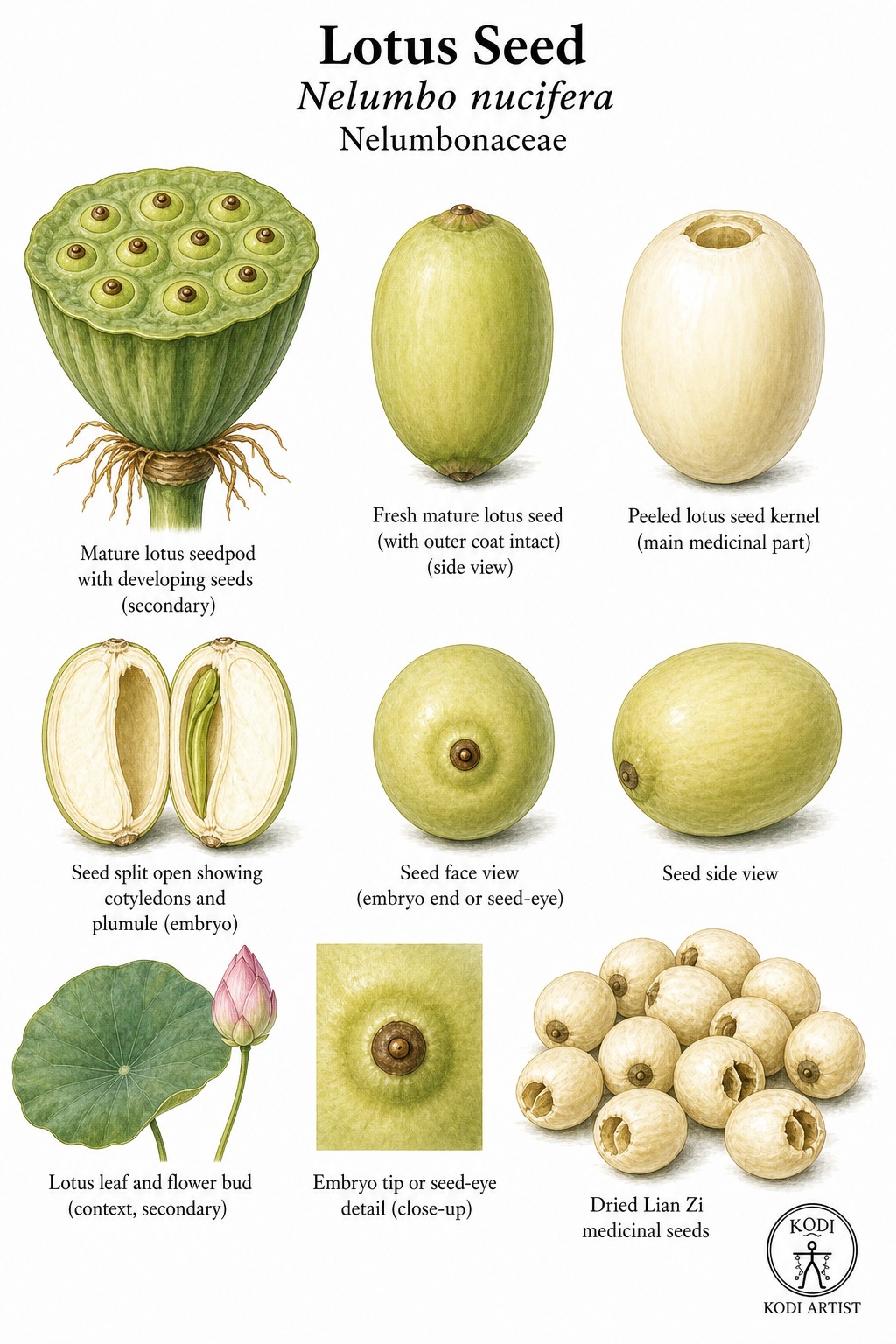
Known in TCM as Lian Zi (莲子), this sweet and astringent, neutral herb enters the Heart, Kidney, and Spleen. Traditionally, it tonifies the Spleen and binds the intestines; treats chronic diarrhea and poor appetite from Spleen deficiency, most often applied for diarrhea, leukorrhea, and insomnia. Modern research has identified Flavonoid among its active constituents.
Part used: Seed
Also Known As
Latin: Semen Nelumbinis | Pinyin: Lian Zi | Chinese: 莲子
TCM Properties
- Taste
- sweet, astringent
- Temperature
- neutral
- Channels
- Heart, Kidney, Spleen
Traditional Use
Primary Actions
- Tonifies the Spleen and binds the intestines; treats chronic diarrhea and poor appetite from Spleen deficiency
- Tonifies the Kidney and secures Essence; stabilizes leukorrhea, spermatorrhea, and premature ejaculation from Kidney instability
- Nourishes the Heart and calms the Spirit; treats irritability, palpitations, and insomnia from Heart-Kidney disharmony
Secondary Actions
- Widely used as a food-medicine in tonic soups and congee
Classic Formulas
- Gui Pi Tang (Restore the Spleen Decoction)
- Qing Xin Lian Zi Yin (Clear the Heart Lotus Seed Drink)
Classical References
- Shen Nong Ben Cao Jing (Divine Farmer's Materia Medica, c. 200 CE) lists lotus seed among the upper-class tonics
- Ben Cao Gang Mu (Li Shizhen, 1578) describes its role in tonifying the Spleen, securing Essence, and nourishing the Heart
Modern Research
Active Compounds
- Flavonoid C-glycosides and O-glycosides
- Alkaloids (neferine, nuciferine, liensinine)
- Polysaccharides
- Phenolic acids
Studied Effects
- Strong free-radical scavenging activity demonstrated in DPPH and nitric oxide assays
- Antioxidant, anti-inflammatory, hypoglycemic, and anticancer activity reported across multiple studies
- Investigated as a functional food ingredient for chronic disease prevention
PubMed References
Safety & Interactions
Cautions
- Excess Heat, constipation, or abdominal distension due to its astringent, binding nature
Classic formulas that use Lotus Seed
Herbs are rarely taken alone in Chinese medicine. These formula pages show what this herb does inside a classic prescription and which pattern that prescription is chosen for.
Conditions
- Diarrhea Traditional ★★☆☆☆ JSON
- Leukorrhea Traditional ★★☆☆☆ JSON
- Insomnia Traditional ★★☆☆☆ JSON
- Palpitations Traditional ★★☆☆☆ JSON
- Poor Appetite Traditional ★☆☆☆☆ JSON
Frequently Asked Questions
What is Lotus Seed used for?
Lotus Seed is traditionally used to Tonifies the Spleen and binds the intestines; treats chronic diarrhea and poor appetite from Spleen deficiency, Tonifies the Kidney and secures Essence; stabilizes leukorrhea, spermatorrhea, and premature ejaculation from Kidney instability, Nourishes the Heart and calms the Spirit; treats irritability, palpitations, and insomnia from Heart-Kidney disharmony. Research has investigated its effects on: Strong free-radical scavenging activity demonstrated in DPPH and nitric oxide assays; Antioxidant, anti-inflammatory, hypoglycemic, and anticancer activity reported across multiple studies.
What are other names for Lotus Seed?
Lotus Seed is also known as Nelumbo nucifera, Nelumbinis. In TCM: 莲子 (Lian Zi); Semen Nelumbinis.
Is Lotus Seed safe during pregnancy?
Lotus Seed is generally considered safe during pregnancy in normal amounts. Therapeutic or concentrated doses should be discussed with a qualified healthcare provider before use.